Content
A European toy buyer opens a September sample box and finds a white bear kit with a satin outfit, a plastic needle, and a six-page instruction booklet. The kit looks shelf-ready. Then QC asks three questions: Is the filling clean and documented? Can a seven-year-old finish the sewing step without frustration? Does the outfit color match the approved lab dip under retail lighting? Those questions separate a craft idea from a shippable DIY plush kit for girls.
The short answer: work with a DIY plush kit for girls manufacturer that treats the kit as an assembly of controlled components, not as a plush toy with a bag of stuffing added at the end. Fabric, filling, accessories, instructions, and packaging each need a specification. When one item is vague, the problem usually appears in sample review or at the retail DC, not on the concept board.
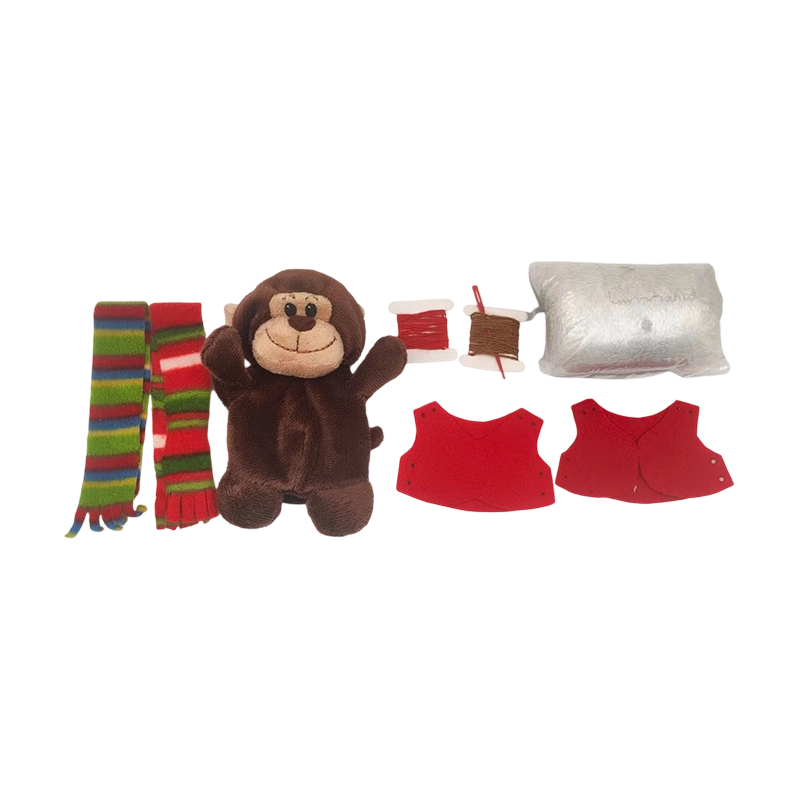
Girls' DIY plush kits usually combine a sewn body, a costume or dress-up element, filling, a child-safe needle, thread, and an instruction booklet. The outfit often adds more pattern pieces than the animal. A white bear with a removable outfit, a pink bear with dress decorations, and a princess bunny with a purple dress can look similar in a catalog photo, yet their cut-and-sew complexity may differ by 20-30 percent.
For retail review, list every component and its function:
Age grading should be explicit. A kit that needs precise stitching is not the same as a no-sew felt craft. If the product is positioned for younger children, replace the sewing step with lacing or adhesive-free assembly and state that on the front of the pack.
Most sample revisions come from small specification gaps. The animal pattern is approved, but the dress fabric is not; the fill weight is correct, but the booklet still shows the old hole layout. A useful brief controls the kit at component level.
| Specification area | What to write in the brief | Why it matters in production |
|---|---|---|
| Panel fabric and pile | Fiber content, pile height, color standard, and shrinkage allowance. | Changes hand feel, cut accuracy, and color match under retail lighting. |
| Pre-punched holes | Hole diameter, spacing, and alignment tolerance, for example plus or minus 1 mm. | Misaligned holes make assembly frustrating and increase returns. |
| Filling | Material, weight per kit, cleanliness requirement, and packing method. | Controls shape, cost, and compliance documentation. |
| Outfit construction | Pattern pieces, trims, closure type, and whether the outfit is removable. | Drives sewing time, small-part risk, and the play pattern. |
| Packaging and labels | Dieline, language versions, age warning, batch code, and test marks. | Prevents rework at the carton stage and supports market entry. |
Color matching deserves its own line. Ask for a physical standard, then check the outfit fabric and plush body together. A white bear with a cream outfit may read as a mismatch on a white shelf. Tolerance also needs a number: plus or minus 2 mm on cut panels is a reasonable starting point for many kits, but the final figure should match the pattern and the child's assembly step.
The fastest way to compare quotes is to benchmark a known format. A single bear with one outfit usually needs fewer pattern pieces than a bunny with a dress, but outfit construction and packaging can reverse the cost ranking. These three formats cover a useful range for a first production run.
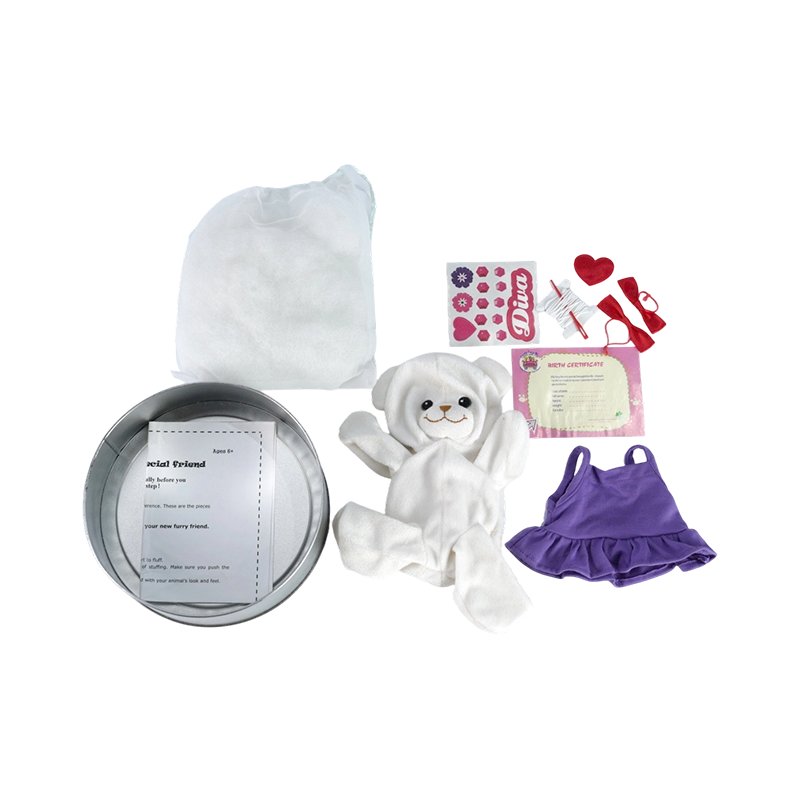 Fashion White Bear DIY Plush Kit with OutfitMilk-white bear kit includes purple vest dress, butterfly clips, stickers, stuffing, tools, instructions, and birth card for a gift-ready first production benchmark.View Product →
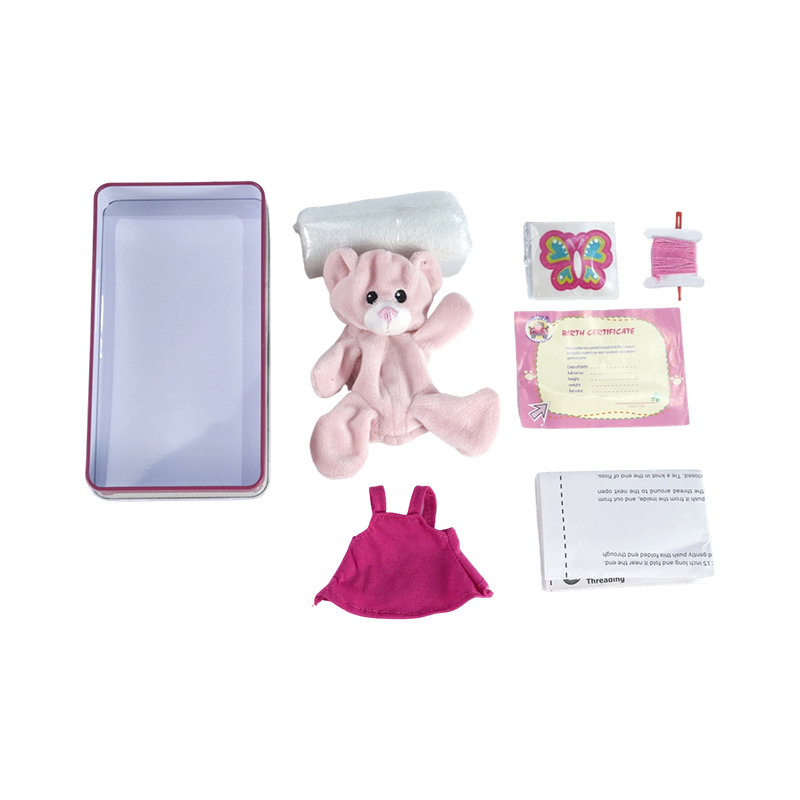 Pink Plush Bear DIY Craft Kit with DressPink bear kit includes peach-pink pinafore, butterfly appliqués, stuffing, tools, instructions, and birth card; removable dress extends dressing play.View Product →
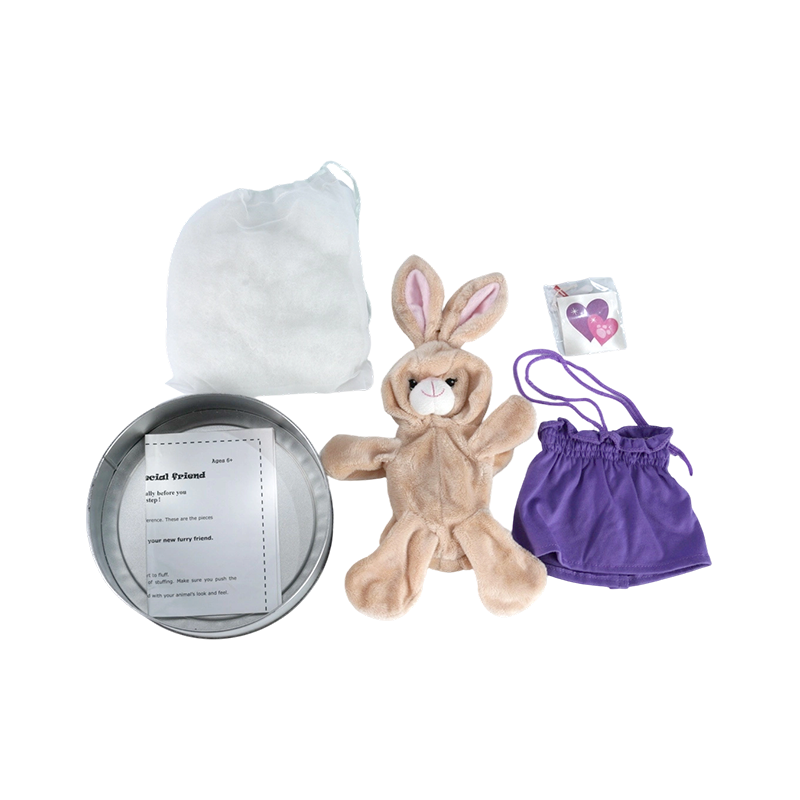 Princess Bunny DIY Plush Kit with Purple DressHoney-colored bunny kit includes purple pinafore, rose-red appliqués, stuffing, sewing tools, instructions, birth card, and reusable tin for princess-themed gifting.View Product →
Use them as reference points, not fixed templates. Ask each supplier to quote the same fill weight, the same number of outfit pieces, and the same instruction page count.
A factory can sew a bear. A manufacturing partner should question the kit before sampling: Is the dress pattern too complex for the target age? Does the hole layout work with the thread length? Will the retail carton fit the stuffed kit without compressing the outfit? That review is where cost and frustration are removed.
Capacity matters, but capacity without sample discipline is a risk. Ask for a milestone schedule that separates concept review, sample approval, bulk material booking, production, and inspection. A supplier with 23+ years of experience, a 1,825 square meter factory, 200+ staff, and 1.5 million sets per year may have the scale, but the project still needs a named contact and a written approval loop. For a closer look at how kit projects move from brief to bulk, see this DIY plush toy kit manufacturing guide.
Compliance is not a sticker added at the end. For the EU, specify the applicable EN 71 parts for mechanical and physical properties, flammability, and migration. For the US, specify ASTM F963 and CPSIA requirements where they apply. Then connect those standards to the actual kit: small parts, sharp edges, needle design, stuffing cleanliness, colorfastness, and labeling.
"We use safe materials" is not a line item. A test report, a material declaration, and an approved label artwork are.
If you are comparing suppliers, send your kit brief, target age group, and retail market through the contact page.
MOQ depends on fabric, outfit complexity, and packaging. Ask for a tiered quote that separates sampling, materials, and production so you can compare the real cost at your launch volume.
Yes. Provide the dieline, language versions, and required marks. The manufacturer should return an artwork proof and a physical sample before bulk printing.
Timelines vary with component sourcing and outfit construction. Request a milestone schedule with sample approval, bulk materials, production, and inspection dates rather than one lead-time number.
Suitability depends on test reports, labeling, and final materials. Specify EN 71 for the EU or ASTM F963 and CPSIA for the US, then verify the report covers the exact kit.
A girls' DIY plush kit can look simple on a shelf and still carry dozens of decisions: hole spacing, outfit fabric, fill weight, needle type, instruction language, and carton compression. The right manufacturer makes those decisions visible before the PO, not after the first container.
Start with one benchmark kit, one target age group, and one retail market. A partner that can control the kit at component level is more useful than a supplier that can only show a finished plush sample.
Address

Your project will meet a
right solution with Golden Sun



 English
 日本語
 Français
 русский
 Español