Content
A girls DIY animal kit is judged in the first five minutes of assembly. If the dress will not pull over the bear's head, if the stuffing bag is ten grams light, or if a nine-year-old cannot thread the needle that shipped in the box, the review says so and the reorder never arrives.
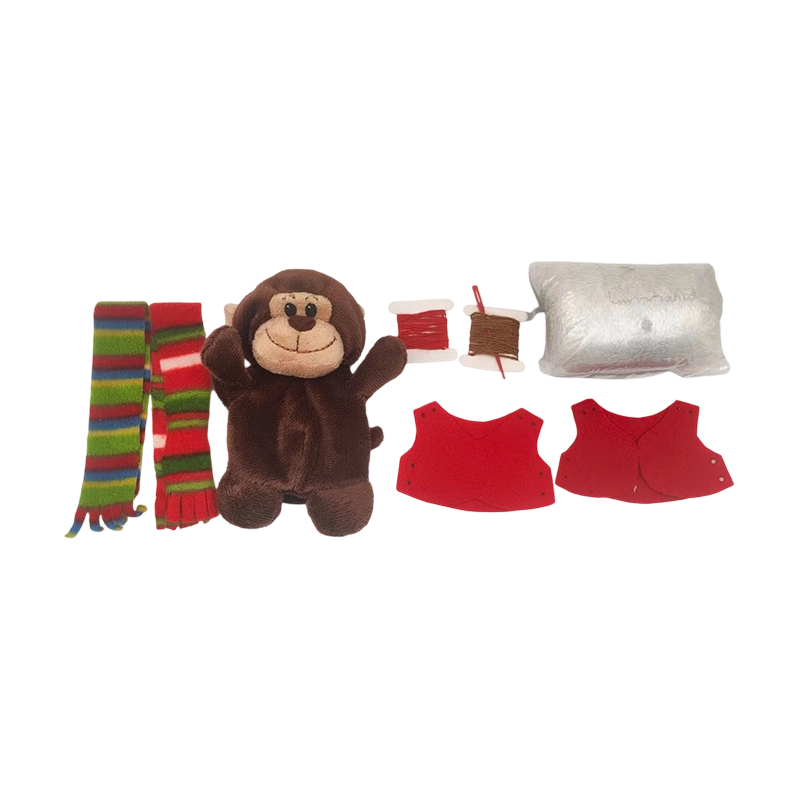
The practical conclusion comes first: specify the kit, then specify the character. A custom DIY animal kit for girls is a small manufacturing project made of five parts, meaning the shell, the fill, the closure method, the outfit and the instructions, and every one of those parts carries a tolerance you should agree in writing before a sample is cut.
We are Tai Zhou Golden Sun Arts and Crafts, a plush and craft kit manufacturer with 23 years in the category, a 1,825 square metre factory, more than 200 staff and an annual capacity of roughly 1.5 million sets. Most kit problems we are asked to rescue during sampling trace back to a specification that was never written down, not to a factory that cannot sew.
Buyers often compare kit quotations by the character printed on the box. In practice, the price gap sits in the component list, and that list should look identical for every supplier you ask to quote.
"For girls" is not a colour swap on a boys' kit. It usually means a dress or skirt with a real closure, softer pastel colourways, extra decorative handwork such as a stitched bow or ribbon trim, and packaging that shows the animal dressed rather than flat. Those four things drive the handwork minutes, and handwork minutes drive the price.
This decision often stays open until the first sample lands, yet it changes the age grade, the tooling, the instruction sheet and the unit cost.
| Decision point | No-sew lacing kit | Sew-style needle kit |
|---|---|---|
| Typical age grade | 5 to 7 years | 8 years and up |
| Tool in the box | Blunt plastic needle or lacing cord | Steel needle, pre-threaded option |
| Assembly time | 15 to 25 minutes | 40 to 70 minutes |
| Shell supplied as | Pre-sewn panels with punched holes | Pattern pieces with marked seam lines |
| Main quality risk | Torn holes, knotted cord | Skipped stitches, gap at the closure |
| Safety testing focus | Cord length, hole strength, small parts | Needle point, thread pull strength |
A lacing kit can usually be graded for younger children, which widens the retail channel but caps outfit complexity. Sew-style kits hold a higher price point and a longer engagement time, but they require a needle control process on the production floor, and the instruction sheet has to be tested with real children rather than only proofread.
Before quoting, we ask for these numbers, because each one can be measured at the end of the production line.
Running both ranges on one line is normal. The divergence sits in handwork minutes, not in the plush body.
The bear, bunny or puppy shell can be shared between the two ranges, which is how a brand keeps tooling cost low while running two distinct SKUs.
A kit tends to fail in the market for a different reason than a plush toy fails. The animal is usually fine. The outfit, the needle or the instruction sheet is the problem.
Safety and compliance are integrated from the concept stage in our process, and colour matching is approved against a physical standard, because a dress that only matches on a monitor will fail approval. Our DIY plush toy kit OEM guide covers component confirmation and sampling in more depth.
Three girls' kits show how the same bear and bunny bodies are dressed into different price points.
The fashion white bear kit pairs a soft white shell with a removable outfit, so the animal can be dressed, undressed and re-dressed without the seams opening.
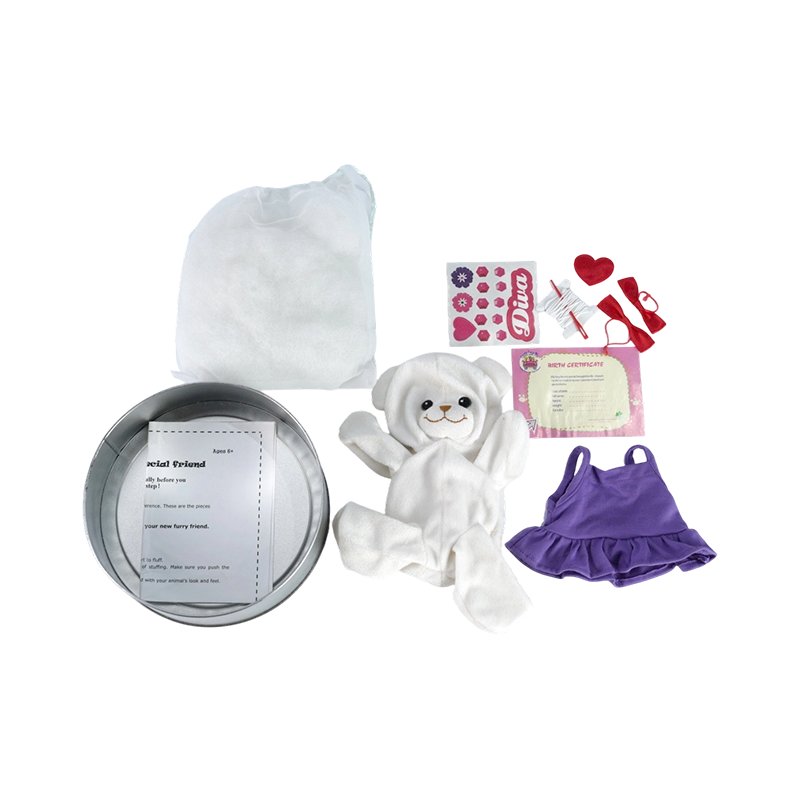 Fashion White Bear DIY Plush Kit With Purple OutfitMilk-white bear shell with removable purple vest dress, butterfly hair clips and stickers; a gift-boxed DIY kit for ages 5-10.View Product →
The pink plush bear kit adds dress decorations rather than a full costume change, which keeps handwork minutes lower and suits an entry price point.
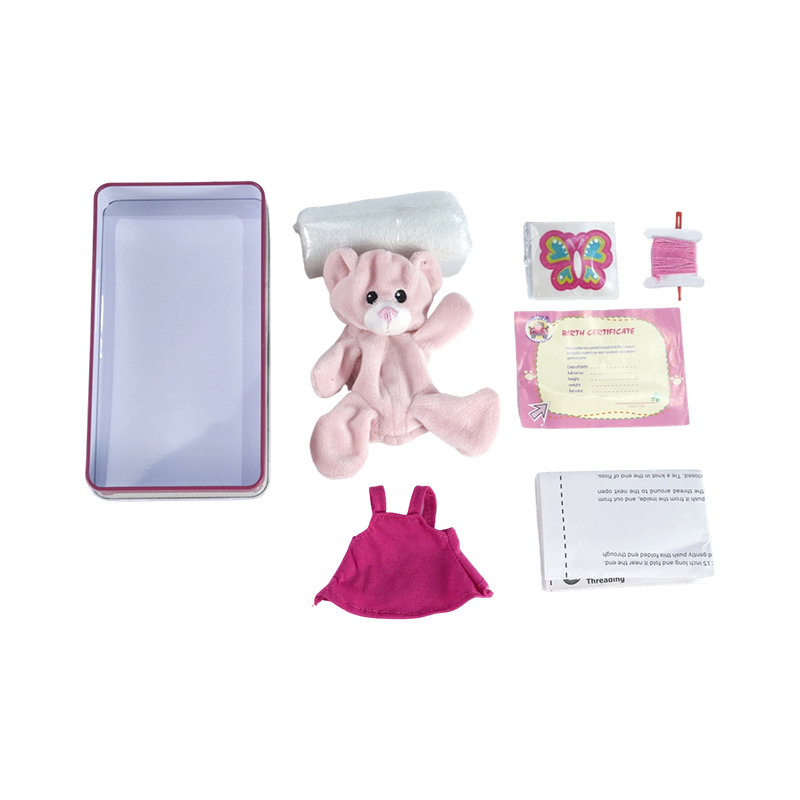 Pink Plush Bear DIY Craft Kit With Dress and DecorationsPink bear shell, peach-pink pinafore dress and butterfly appliqués; an entry-level, gift-boxed DIY kit for ages 5-10.View Product →
The princess bunny kit carries a purple dress with a fixed colour standard, useful when a retailer wants a coordinated shelf statement.
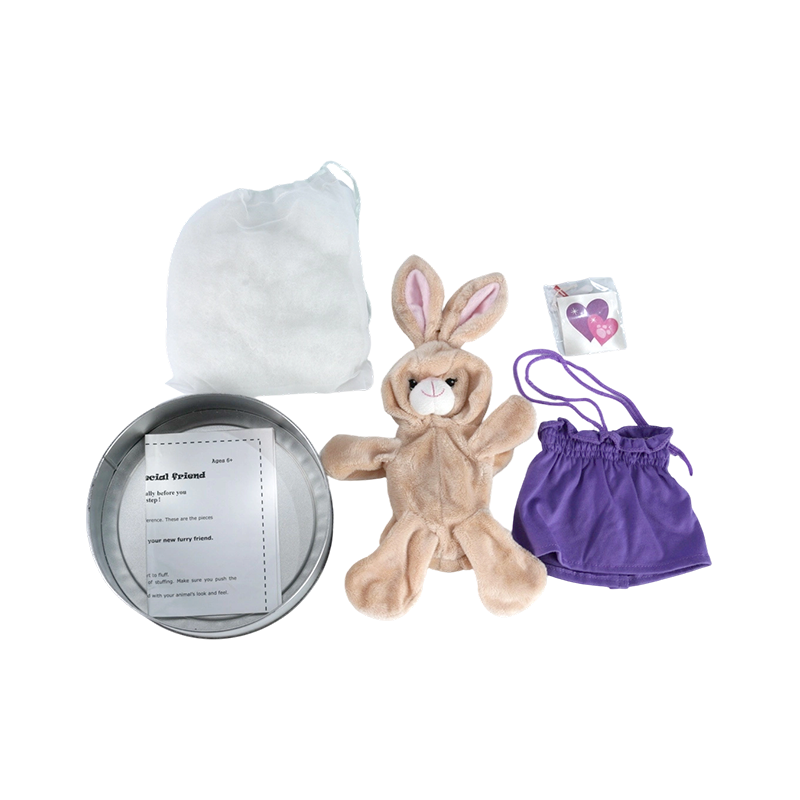 Princess Bunny DIY Plush Kit With Purple Dress and TinHoney-colored bunny with fixed purple pinafore dress and reusable tin; a spring-themed, retail-ready DIY kit for ages 5-10.View Product →
All three follow the same kit structure: weighed fill, child-safe closure, illustrated instructions and retail-ready packaging. The difference between them is outfit complexity, which is exactly what the buyer is paying for.
Minimum order quantity for a girls DIY kit is set by the component with the highest minimum, usually the printed box, a custom accessory or a specially dyed outfit fabric. That makes MOQ a configuration question rather than a factory rule, and it should be quoted per component.
Capacity is the easier part. The factory runs 1,825 square metres with more than 200 staff and produces up to about 1.5 million sets per year across plush toys, plush backpacks and DIY craft kits, so a seasonal girls' kit program fits the same schedule as a plush backpack line. Sampling is usually the slowest step, not production: allow two rounds on a new kit, one for the shell and one for the outfit and instructions.
Ask every supplier the same four numbers: fill weight tolerance, outfit closure test cycles, instruction language set and case pack. A quotation without those four is not comparable, however attractive the price looks.
It depends on the component with the highest minimum, usually the printed retail box or a custom-dyed outfit fabric. Send the kit structure and packaging format with your enquiry and we will quote MOQ per configuration rather than as a single number.
Yes. The shell pattern can be reused with a new dress, bow or accessory set, which keeps tooling cost down and is the fastest route to a second girls' SKU.
Yes. The DIY craft kit range covers animal kits for boys as well, so a program can launch as a matched pair with a shared shell and different outfits and packaging.
Kits for the EU are tested against EN 71 parts 1 to 3, US programs against ASTM F963 and CPSIA, and we also produce for the Japanese market. The test scope is agreed from the tech pack, because lacing cord, needle type and decorative small parts each change the test list.
If you are building a girls DIY animal kit program for next season, the quickest way to get an accurate quotation is to send the component list, the outfit reference and the destination market in one file. We will return a component-by-component price, the MOQ per configuration and a sampling schedule.
Reach the team through our contact page and include your age grade and packaging format. We can usually confirm within one working day which parts of the kit need a decision from you first.
Address

Your project will meet a
right solution with Golden Sun