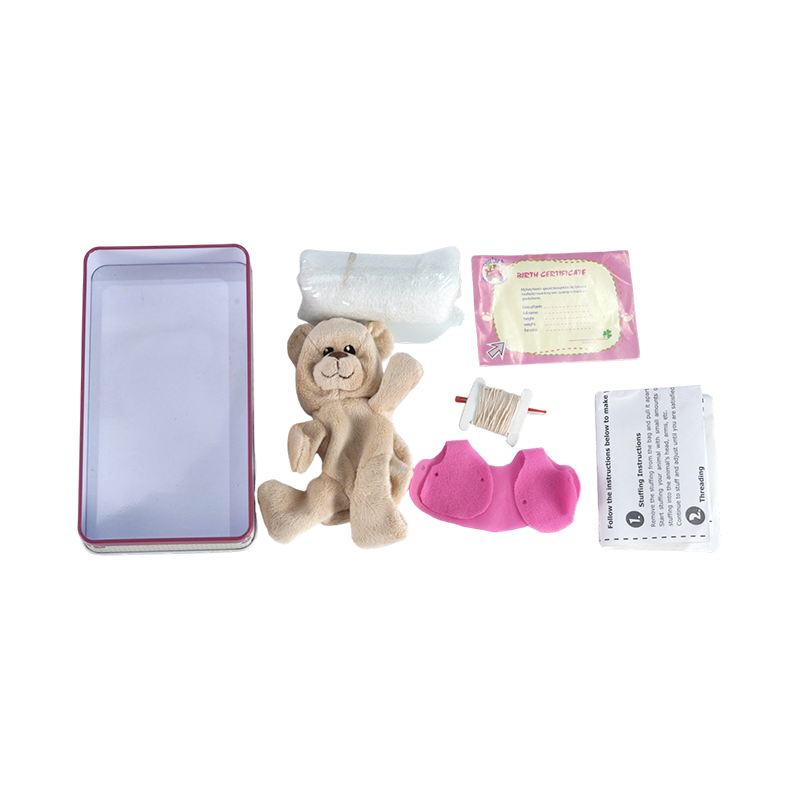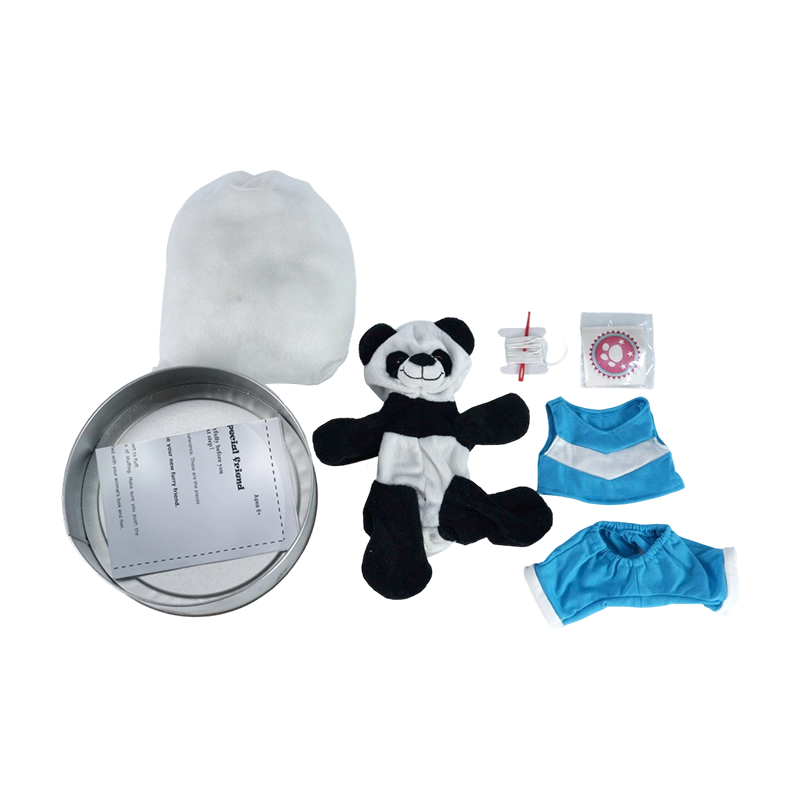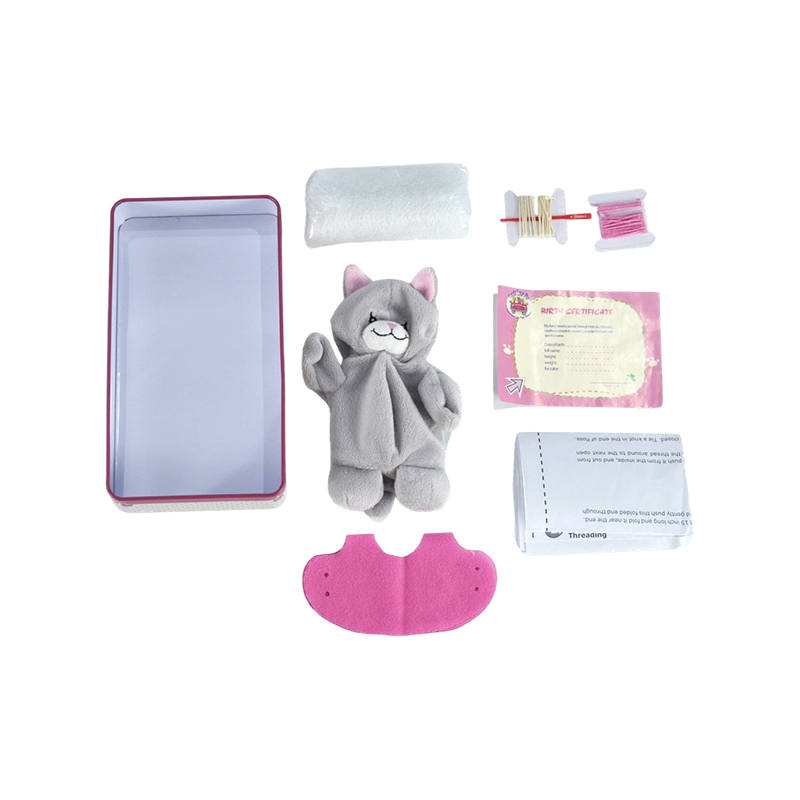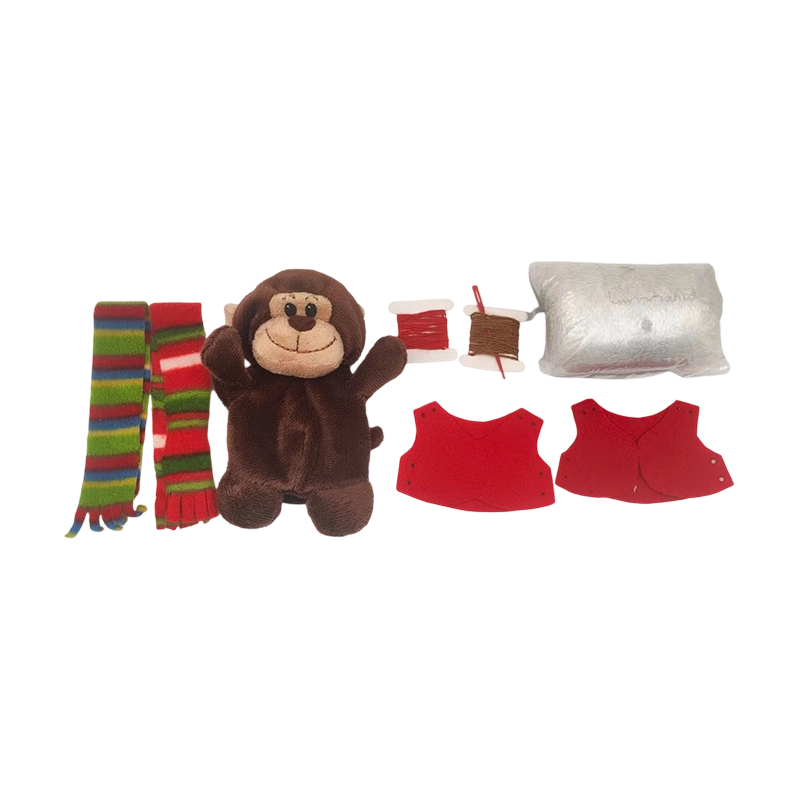
An import buyer can often spot a weak DIY plush kit before the first stitch: the pre-cut felt is slightly off, the plastic needle bends on the first pull, and the instructions assume a child who has already sewn. The result looks charming in a mock-up but creates returns and parent complaints. The strongest educational DIY plush kit manufacturers treat the product as a learning experience with a manufacturable bill of materials, not as a stuffed animal packed with loose parts. That difference shapes age grading, safety, instructions, sampling, and landed cost.
Educational value comes from clear skill progression. A six-year-old may need pre-punched holes, a blunt needle, and no loose beads; an eight- or nine-year-old can handle a running stitch and stuffing; older children can add outfits or pattern matching. Define the target age band before choosing a format, because the same plush animal can be a 30-minute no-sew project or a two-hour sewing lesson.
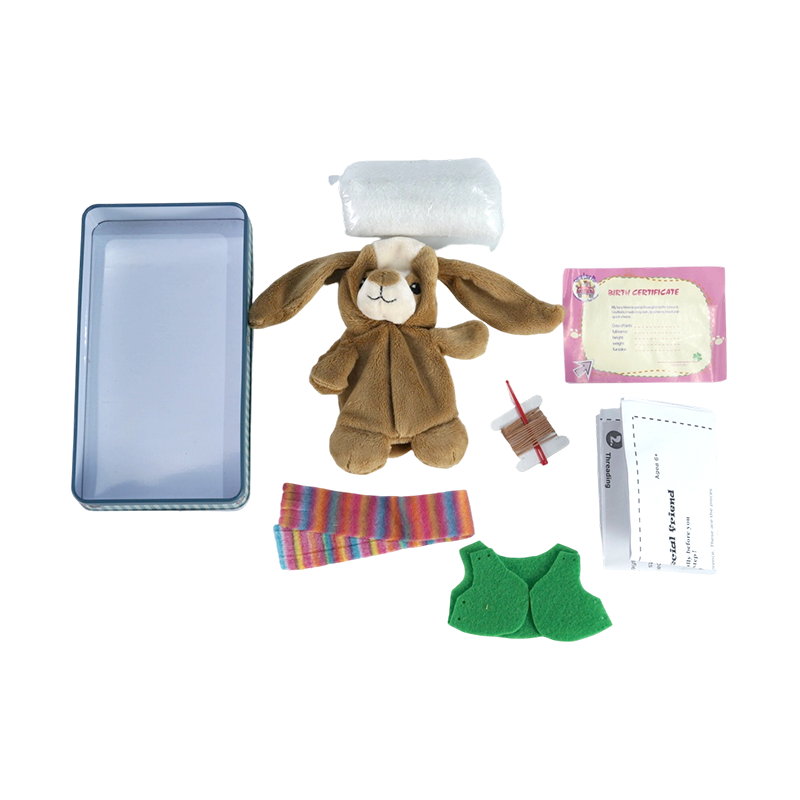 Brown Long-Ear Puppy DIY Plush KitIncludes puppy shell, vest, scarf, stuffing, needle, thread, instructions, and birth card for a guided sewing-and-stuffing craft project.View Product →
The kit should teach a sequence: identify pieces, align markings, stitch or lace, stuff evenly, close the seam, add accessories, and finish. If the instructions skip the stuffing tolerance or show a seam that cannot close with the supplied thread, the child will improvise. A kit that works on a sales office table may fail when 500 units are packed with different pile direction, cut tolerance, or thread lot.
Good kits include a mistake-recovery path. Spare thread, a second set of pre-cut holes, or a forgiving felt weight can keep a child moving after a wrong turn. These details reduce frustration and protect the brand's review score.
There is no universal educational format. The right choice depends on age, retail price, shelf space, and how much adult help the buyer will accept. The table below compares common DIY plush kit structures.
| Format | Typical user | Learning focus | Manufacturing watchpoint |
|---|---|---|---|
| No-sew stick-and-fill | 5-7 with adult help | Piece matching, stuffing, closure | Pre-cut holes, adhesive quality, small parts |
| Pre-punched sewing | 7-9 | Running stitch, seam alignment, finishing | Hole spacing, needle gauge, thread length |
| Full sewing with outfit | 9-12 | Pattern reading, construction, decoration | Fabric stretch, accessory attachment, instructions |
| Mini gift kit | 6-10 | Quick assembly, collecting | Packing accuracy, polybag and label compliance |
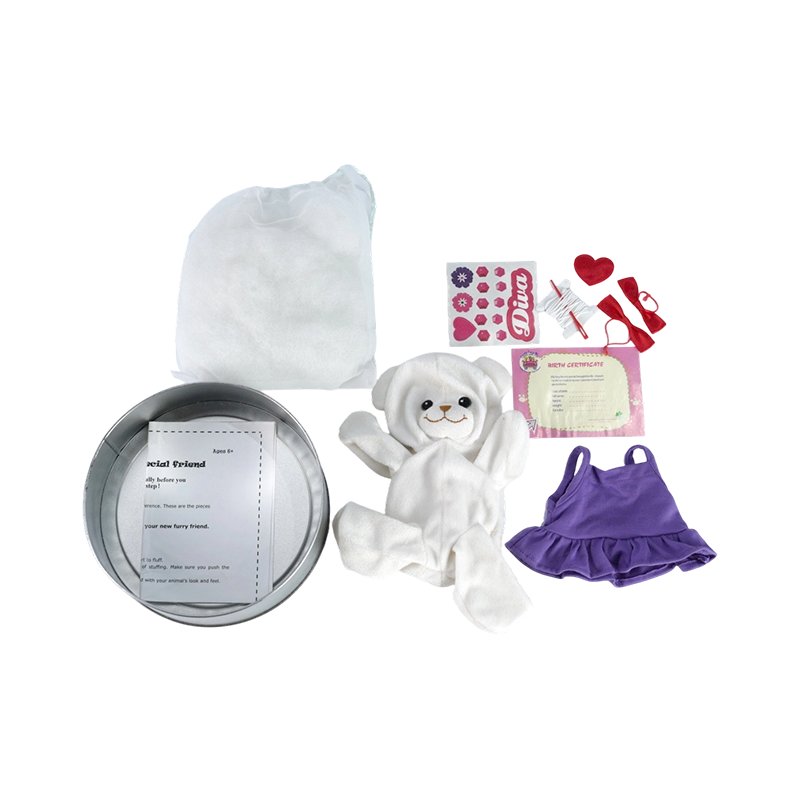 Fashion White Bear DIY Plush Kit With OutfitFor ages 5–10, includes milk-white bear shell with heart, purple dress, butterfly clips, stickers, stuffing, needle, thread, instructions, and birth card.View Product →
For a retailer, the safest educational story is not the most complex kit. It is the kit whose skill demand matches the child's age and whose pieces arrive in the right order. A 9-year-old who can follow a six-step sewing sequence will finish a white bear with an outfit and feel competent. A 6-year-old who needs adult help will do better with a pre-punched animal and a blunt needle.
A DIY plush kit is a toy, a craft item, and a retail package at once, which attracts scrutiny. Depending on the market, the buyer may need EN71, ASTM F963, CPSIA, or other national requirements, plus packaging and labeling review. Set the test plan before tooling, not after the first shipment. Small parts, stuffing migration, seam strength, attachment security, needle safety, and age-warning text all belong in the specification. The EU toy safety framework, for example, continues to tighten documentation expectations, so manufacturing discipline is part of product design.
Buildability is also a safety issue. A needle that is too sharp, a thread that knots easily, or a closing seam that leaves a raw edge can push a child to improvise with household tools. Safe materials do not compensate for a confusing assembly sequence. Review the sample with the intended age group or a clear age-appropriate checklist.
The gap between a charming prototype and a repeatable retail kit usually sits in component control. Pre-cut felt pieces need consistent hole placement and grain direction. Stuffing needs a specified weight and loft so the finished animal matches the photo. Thread needs a colour lot and length that supports the steps. Outfits must attach securely enough for play but simply enough for a child to manage.
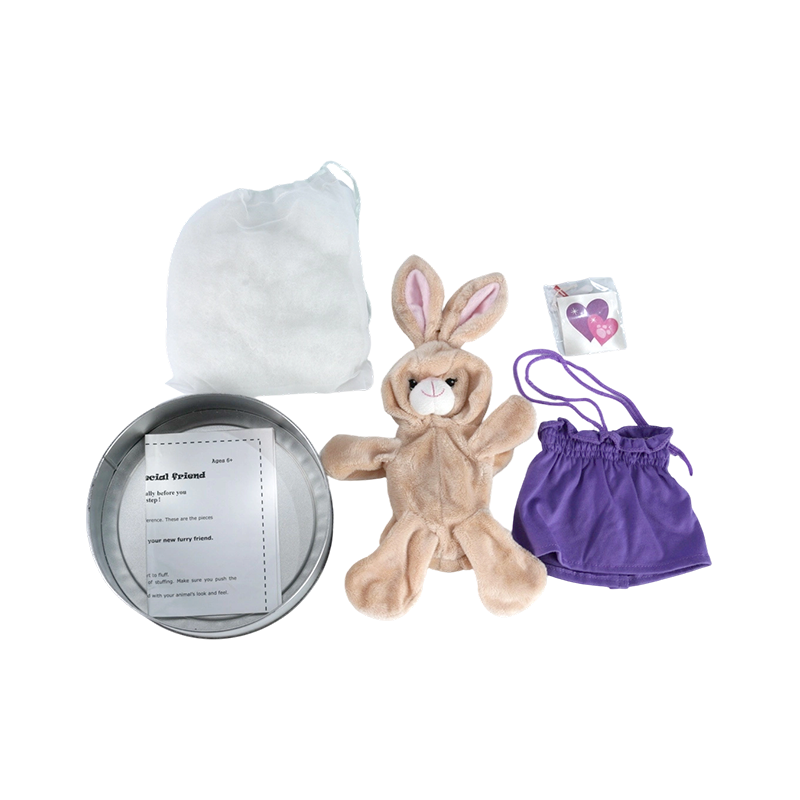 Princess Bunny DIY Plush Kit With Purple DressIncludes honey-colored bunny shell, purple pinafore, transfer appliqués, stuffing, needle, thread, instructions, birth card, and reusable round tin for ages 5–10.View Product →
A manufacturer with real production experience can map those details before mass production. Tai Zhou Golden Sun Arts&Crafts, for example, has 23+ years in plush and crafts, a 1,825 m² factory, 200+ staff, and annual capacity of 1.5 million sets per year. That scale matters for sample iterations, colour matching, and stable supply across Europe, the US, Japan, or Southeast Asia. Having kits, plush toys, and kids bags under one roof also helps when a program combines a kit with a matching backpack.
Sampling should be a decision gate. Approve the instruction sheet, packed component count, finished size, stuffing feel, retail carton, and age warning before the first bulk order. Ask someone who has not seen the prototype to assemble the sample; that test exposes missing steps faster than a line review.
A good educational DIY plush kit manufacturer will welcome specific questions, because vague briefs create expensive samples. Compare suppliers on product logic and production control, not only unit price.
MOQ, lead time, and FOB terms are commercial points, but they still need to be tied to the approved sample and packaging.
Most kits are grouped by skill, not just age. No-sew kits may suit children around 5-7 with adult help, pre-punched sewing kits around 7-9, and fuller sewing kits around 9-12. Confirm the destination market's age-grading and warning requirements.
Yes. They are generally treated as toys or craft kits with toy-like components, so the applicable toy safety rules in the destination market should be checked. Testing should cover small parts, attachments, seam strength, materials, and labeling.
Yes, but organize by skill and interest rather than colour alone. Animal choice, outfit options, and instruction complexity can create variety without splitting the line into stereotypes.
The production sample, component count, instruction sheet, retail packaging, age warning, colour standard, and test plan should all be approved. Any change to the bill of materials should trigger a new review.
For buyers, the practical conclusion is simple: choose an educational DIY plush kit manufacturer that can explain how the kit teaches, how it is tested, and how it will be packed. A low unit price cannot rescue a kit that loses pieces, confuses children, or fails a safety review. A manufacturer with sample-room discipline and plush production experience can turn a craft idea into a retail program that parents trust and children finish. If you are planning a kit range, discuss the brief and sample path with the factory before the artwork is final.
Address

Your project will meet a
right solution with Golden Sun



 English
 日本語
 Français
 русский
 Español