Content
A retailer's brief arrives with a 28 cm dinosaur shell, pre-sewn, plus polyester fill, a blunt plastic needle, felt patches and a six-step illustrated booklet. Target cost: USD 4.20 FOB. First run: 6,000 units.
Here is the conclusion first. The factory that will actually deliver that brief is not the one with the widest catalogue or the prettiest animal sketches. It is the one that can hold a fill weight to within five grams, keep every stuffing opening between 5 and 7 cm, and prove both with a production sample before bulk starts. Colour cards and artwork are easy to copy. Assembly tolerances are not.
A DIY stuffed animal kit is a semi-finished toy. Your customer's child completes the assembly, which means quality problems surface at the kitchen table rather than in your warehouse. That single fact drives every specification decision below.
| Component | Typical specification | Where buyers get caught |
|---|---|---|
| Pre-sewn plush shell | 220-300 gsm short-pile velboa, 8-12 sewn panels, 5-7 cm opening | Openings under 5 cm make stuffing awkward for a six-year-old |
| Polyester fibre fill | 80-120 g virgin PP fibre, 7D x 64 mm | Recycled fill can clump and carry odour; migration testing still applies |
| Blunt plastic needle | 5-6 cm, large eye, rounded tip, no metal core | Metal needles fail EN 71-1 outright and stop a container |
| Thread and felt accessories | 2-3 m embroidery floss, pre-cut felt patches | Loose fibre shedding fails the small-parts cylinder check |
| Instruction booklet | A5 colour, 6-10 illustrated steps | Weak diagrams drive returns and customer service tickets |
| Name tag or birth certificate | Printed card or woven fabric label | Cheap to add, and the main reason a child keeps the kit |
Two line items cause most of the trouble: the shell opening and the fill weight. Get those right and the rest of the kit is packaging.
A finished plush toy is inspected once, at your QC station. A kit is inspected by a seven-year-old with a handful of stuffing. Factories that handle this well set fill weight with a plus or minus five gram tolerance, spec a 5-7 cm opening, and mark the fill line on the inside of the fabric so the result looks the same in every household.
Under EN 71-1 and ASTM F963, a kit sold as "make your own toy" must be safe as shipped and safe once assembled. The blunt needle gets the most attention, but the fibre fill, the printed booklet and any ink on the felt patches all belong in the test file. Ask for the test report that names the finished article, not just the raw materials.
Approximate stage durations for a 5,000-piece custom kit order; fabric dyeing adds 7-10 days on top.
"For boys" is mostly a colourway and packaging decision, not a new pattern. The same 28 cm shell that carries a dinosaur can carry a shark, wolf or fox with a patch change, and one pattern can run in two colourways with a single set of tooling. That is the cheapest way to open a second SKU.
Every card below is a kit currently in our boys' DIY range, from the pre-sewn shell to the finished character. Use these as a starting reference for colourway, patch placement and animal choice before we move to custom sampling.
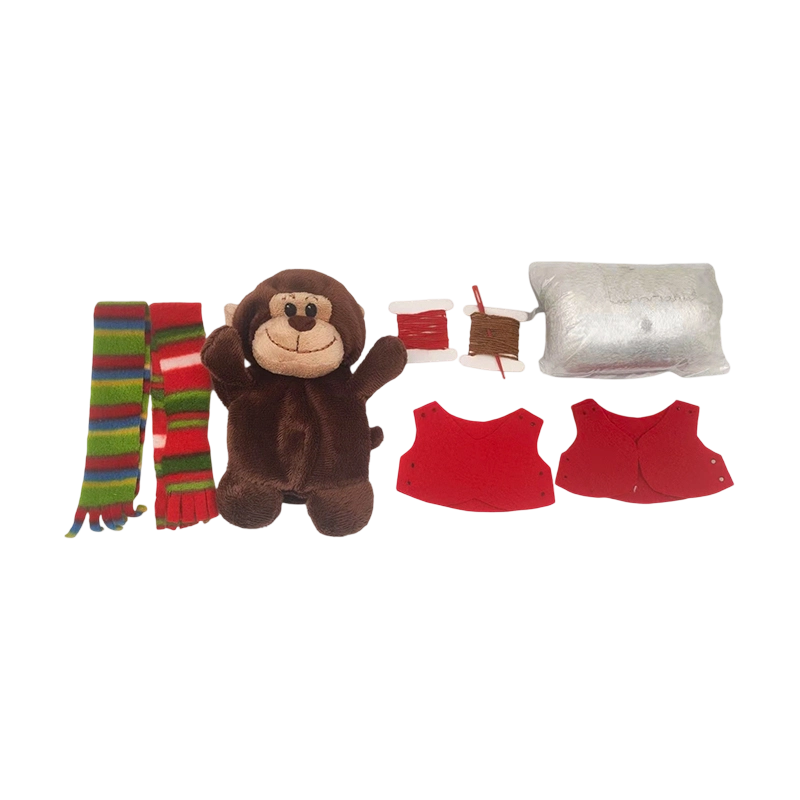
DIY Stuffed Monkey Craft Toys Kit
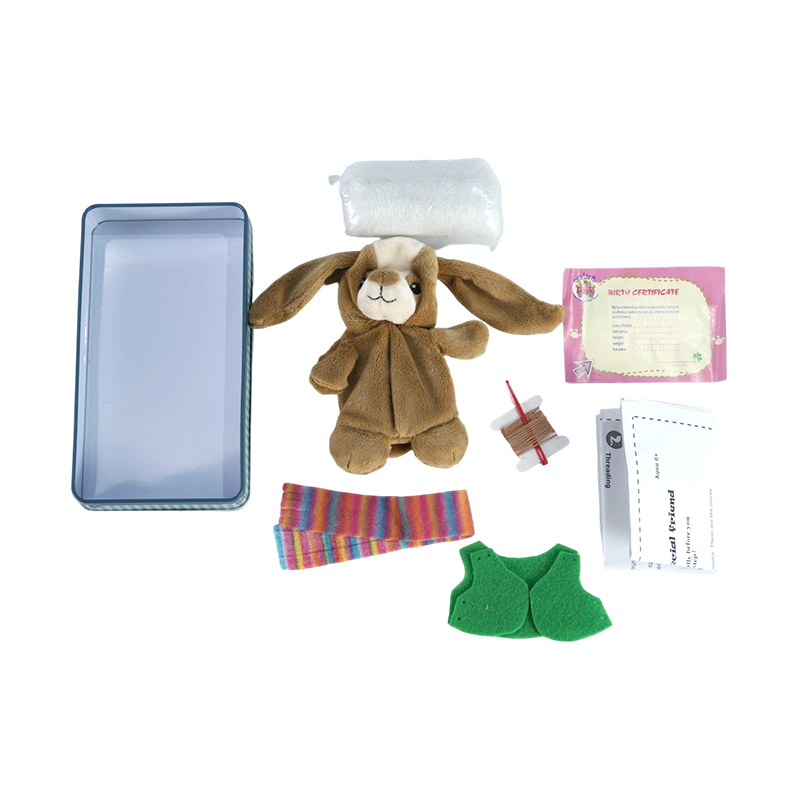
Brown Long Ear Puppy DIY Plush Toy Making Kit
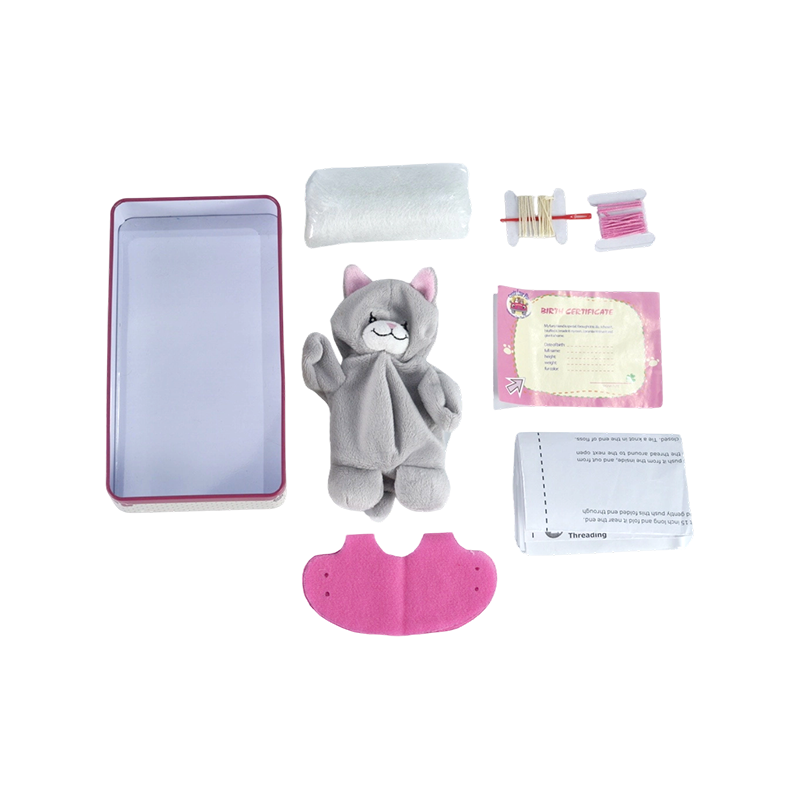
Grey Cat Handmade Plush DIY Craft Making Kit
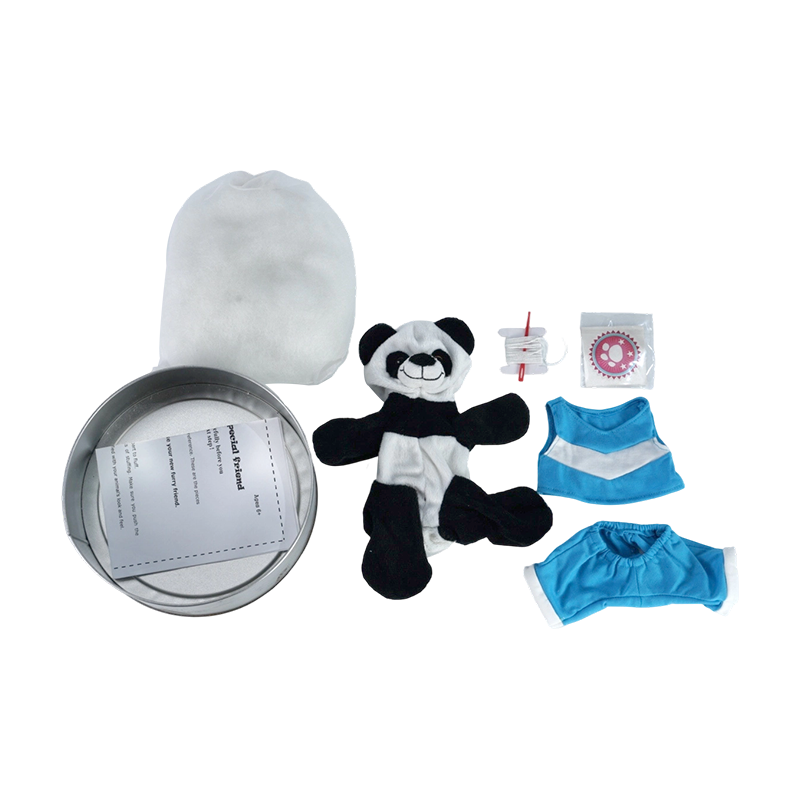
Sporty Panda DIY Plush Toy Making Craft Kit
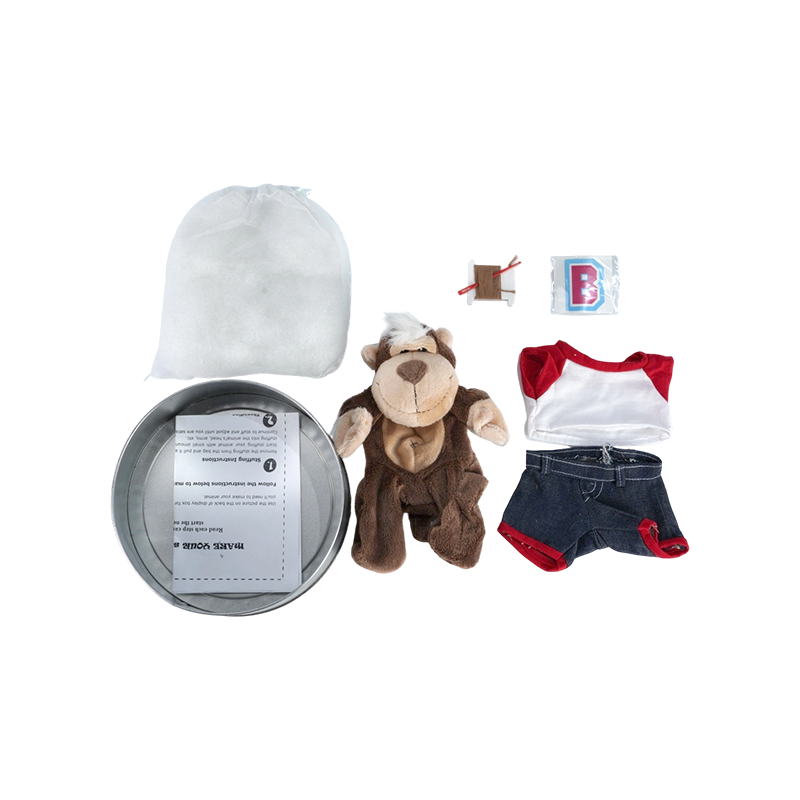
Retro Baseball Monkey DIY Plush Craft Kit
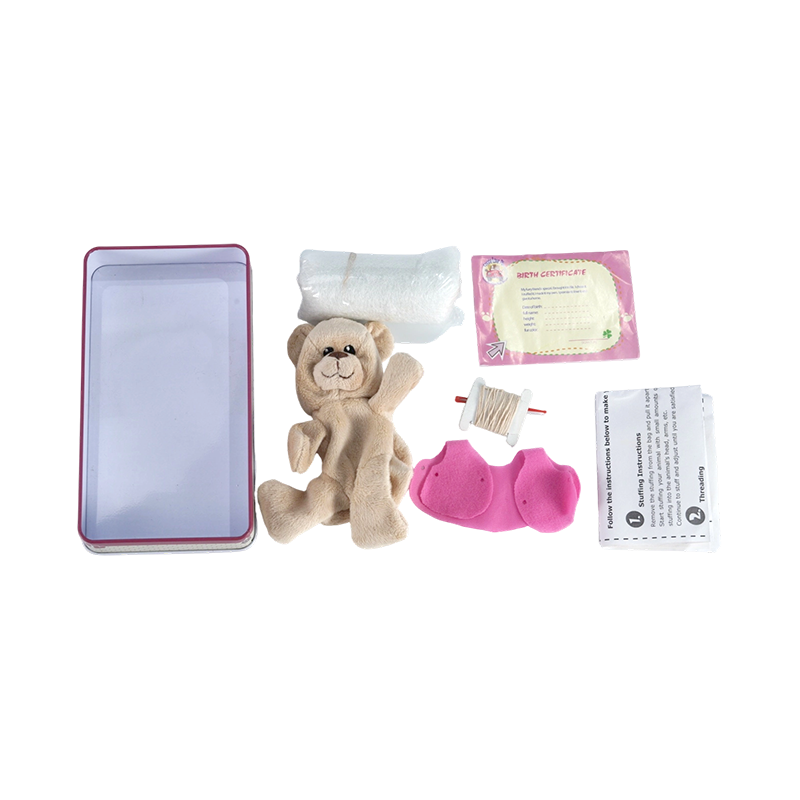
DIY Plush Bear Making Kit Handmade Stuffed Animal Craft Set
| Order tier | Volume | Lead time | What changes |
|---|---|---|---|
| Trial run | 50-100 pcs | 15-20 days | Stock fabric, sample-level pricing |
| Small retail run | 1,000-3,000 pcs | 25-35 days | Stock velboa, screen-printed packaging |
| Mid volume | 5,000-20,000 pcs | 35-50 days | Custom-dyed fabric adds 7-10 days |
| Programme volume | 20,000+ pcs | 45-65 days | Dedicated line, staged deliveries |
Before you place the order, ask these eight questions. A factory that answers all of them with numbers, not adjectives, is worth a second call.
Tai Zhou Golden Sun Arts&Crafts Co., Ltd. has made plush products for more than 23 years. Our factory covers 1,825 square metres with over 200 staff and an annual capacity of 1.5 million sets, supplying brands, importers and retailers across Europe, the United States, Japan and Southeast Asia.
If you are scoping a boys DIY stuffed animal kit programme, send the animal sketch, target age, target cost and volume. We will come back with a sampling plan and a realistic timeline.
Most custom kits start at 1,000 pieces if you accept stock fabric. Custom-dyed plush and printed packaging usually push the practical minimum to 3,000 units.
Yes, when the needle is metal-free, the fill is tested, and the shell opening suits small hands. Age grading of 6+ or 8+ should follow the actual needle work, not the marketing copy.
Yes. Send print-ready files and we will size the booklet, carton artwork and labels to your market's requirements before sampling.
Around 45 to 60 days from approved sample to shipped cartons for a 5,000-piece order, including fabric, sewing, testing and packing.
Address

Your project will meet a
right solution with Golden Sun



 English
 日本語
日本語 Français
 русский
 Español