Content
A buyer in Ohio places an order for 6,000 plush bears in Santa hats, with a Black Friday shelf date. The design is approved in mid-September, the samples look right, and the container leaves the factory on 18 November. It reaches the distribution centre in the first week of December, after the shelf date, after the promotion, and after the budget was spent.
That failure is almost never a sewing problem. It is a calendar problem.
The workable rule for custom Christmas plush toys is simple: freeze the design five to six months before the goods leave the factory, and treat prototyping and safety testing, not bulk production, as the critical path. The rest of this article covers realistic timings, the cost lines that move a quote, the design details that matter for holiday items, and the questions buyers ask before a first order.
A Christmas plush toy has a hard endpoint. Retailers in Europe and North America set holiday aisles between late September and early November, and a toy that lands in December still sells, at a discount and without the shelf position the item was designed for. Sea freight from China to Northern Europe or the US East Coast takes 30 to 45 days plus port handling, so a late-November shelf date usually means the container must sail by late September at the latest.
For a single style in the 5,000 to 20,000 piece range, the sequence below is realistic rather than optimistic.
Two stages are habitually underestimated. The first is sampling. Plush is a three-dimensional product built from fabric that drapes, piles and stretches; a flat illustration does not tell you how a six-inch snowman will read in short-pile velour, or whether the embroidery density will pucker the face. Budget two revision rounds, and expect each round to reset the pattern, the embroidery file and the cutting plan.
The second is compliance testing. Laboratories need the production-intent sample, made from the final fabric, fill and trims, and a full report on EN 71, ASTM F963 or CPSIA takes three to five weeks. If the fabric changes after testing, the report is void and the clock restarts. Capacity matters too: a factory plans its autumn in spring, and Christmas work competes with year-round programmes from existing accounts.
Quotes for holiday plush are built up line by line and then expressed as a single FOB unit price. For a mid-size item of roughly 20 to 30 centimetres, the distribution typically looks like this.
Pile height and fabric weight per square metre are the two biggest variables. Short-pile velboa costs less and prints cleanly; long-pile and sherpa fabrics feel more premium but shed, hold lint and are harder to embroider. Fill is polyester fibre, recycled PET fibre, or a fibre-and-pellet blend for weight. Recycled fill carries a small premium, and it is often the first thing a European retail buyer asks about.
Small formats are not automatically cheap. A five-inch plush ornament carries proportionally more hand sewing and turning than a 30-centimetre bear, and a removable hat, scarf or buttoned cape adds a second attachment step plus pull-test obligations if the item is sold for children under three.
Compliance is charged per style, per standard: six SKUs means six reports, not one. Packaging is where gift programmes diverge, because a printed gift box, ribbon and hang tag can add more to the landed cost than the sewing itself. Minimum order quantities are usually set by the fabric mill rather than the toy factory, which is why 1,000 to 3,000 pieces per style is a common floor for a fully custom holiday item, while a stock-fabric design with a printed logo can start lower.
Holiday plush sells on recognition and on gifting, so briefs tend to lean on a handful of recurring formats.
Santa, snowmen, reindeer, penguins, gingerbread figures and winter animals are free to use. Anything resembling a studio-owned character needs a licence, and the licence approval time has to be added to the calendar before sampling even starts.
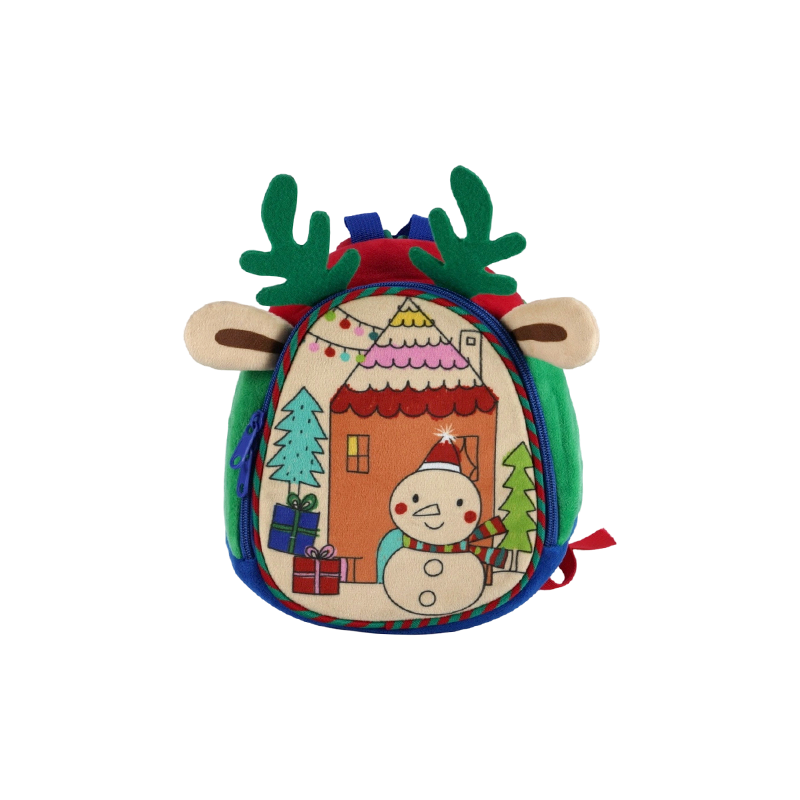
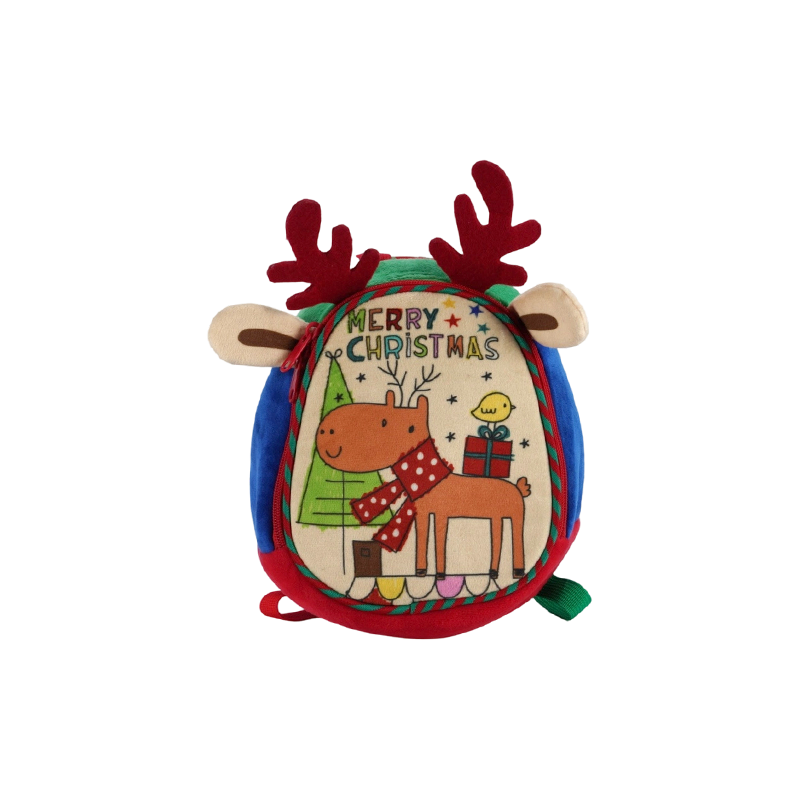
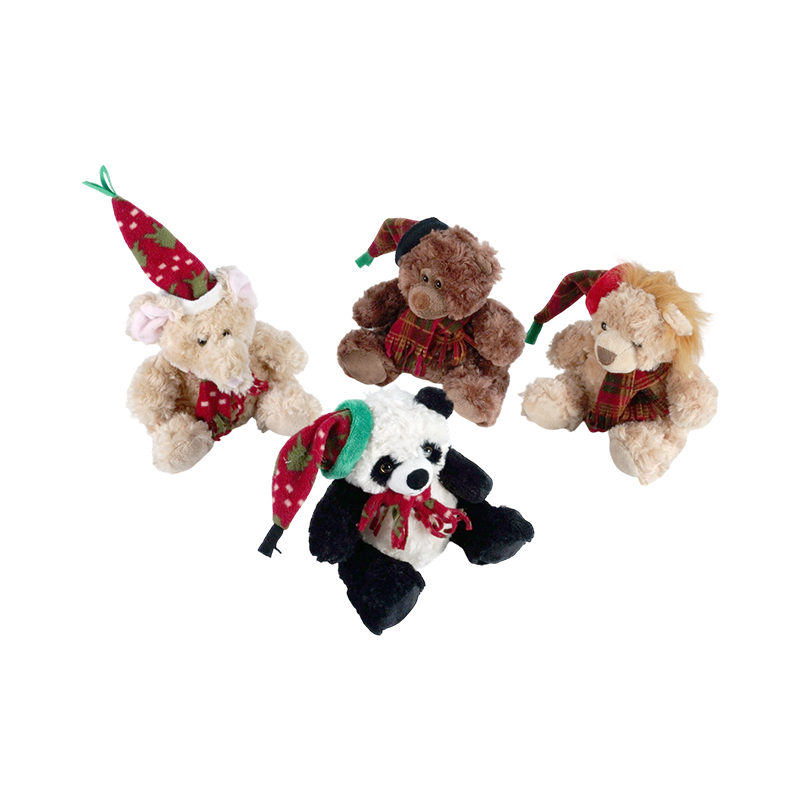 STA01314Christmas Forest Animal Plush Toy CollectionLion, Elephant, Panda, Brown BearView product →
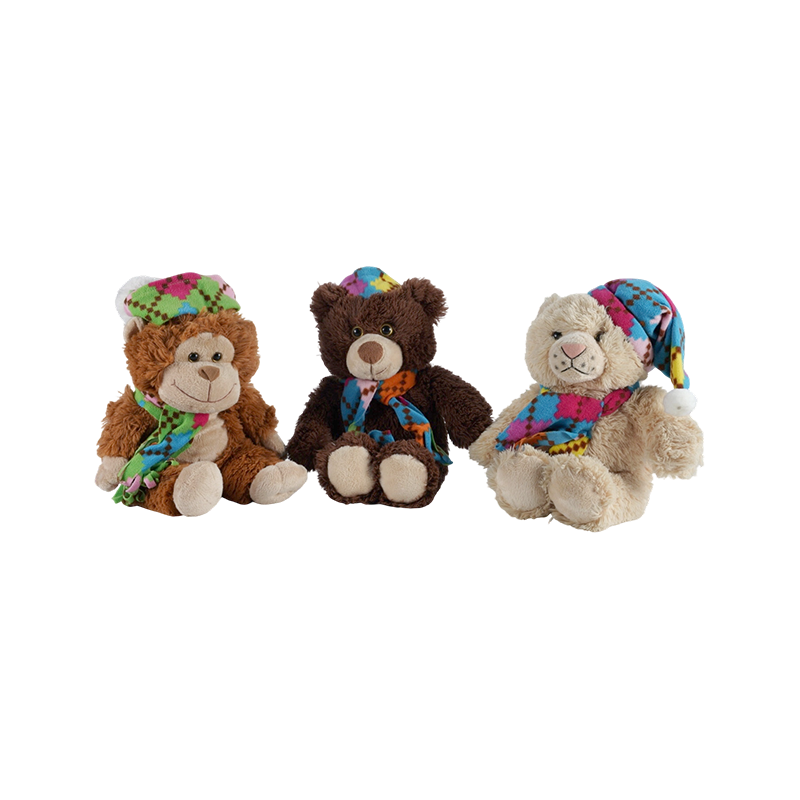
 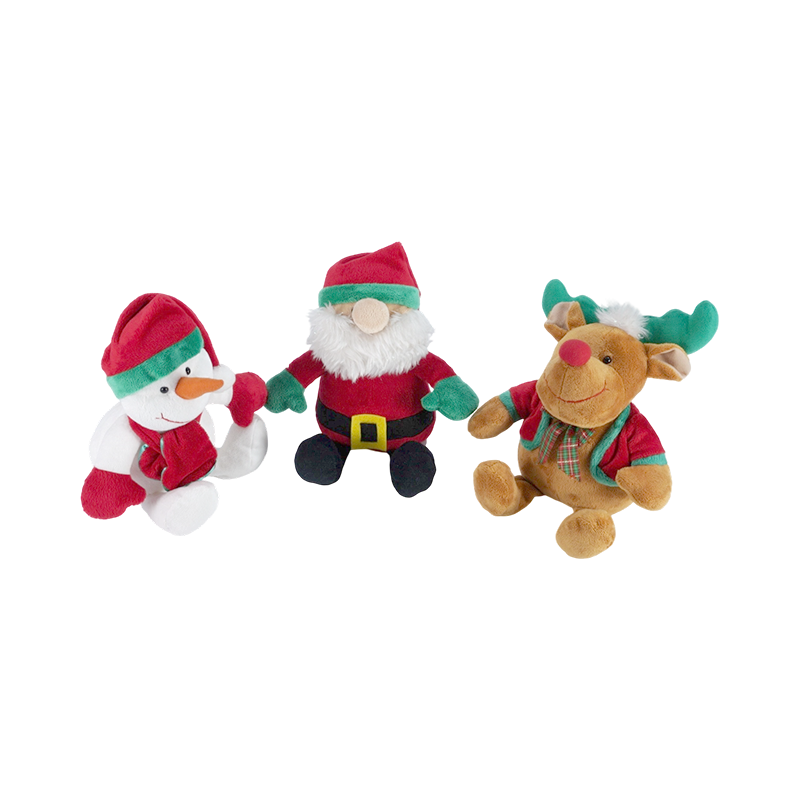 STA01177-1Medium Classic Christmas Plush Toy TrioMedium size formatView product →
 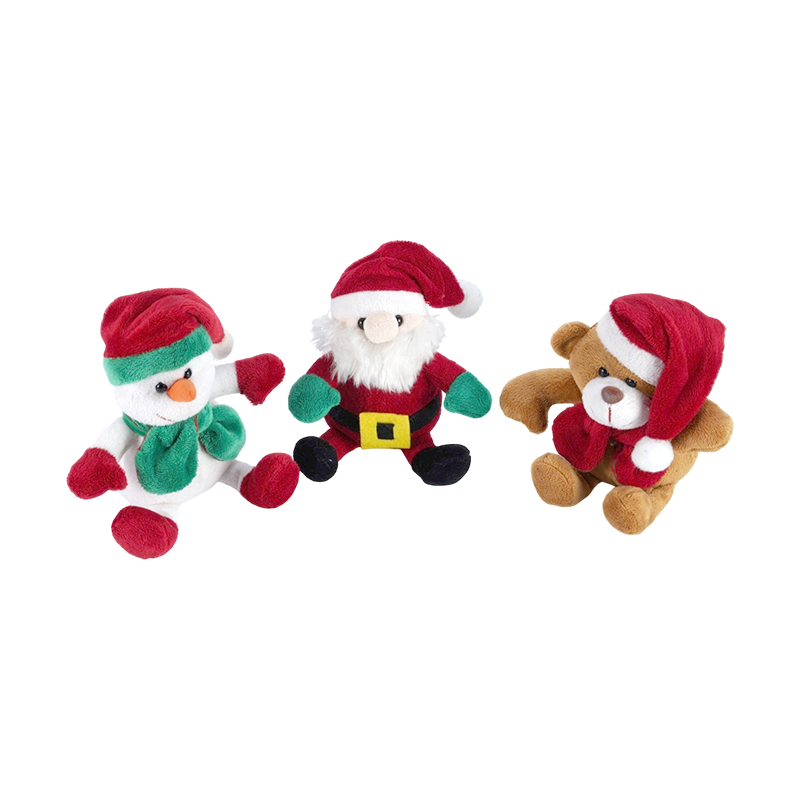 STA01177-2Small Classic Christmas Plush Toy TrioSmall size formatView product →
Four-to-six-inch pieces with a hanging loop, often sold as boxed sets. They photograph well, they hit a lower price point, and they carry more hand work per unit than their size suggests.
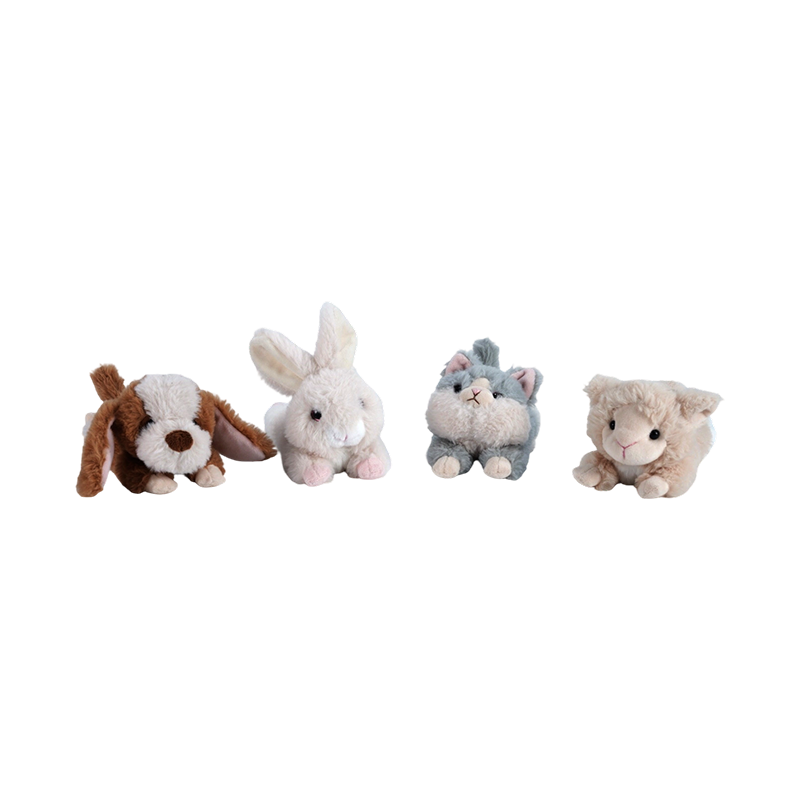
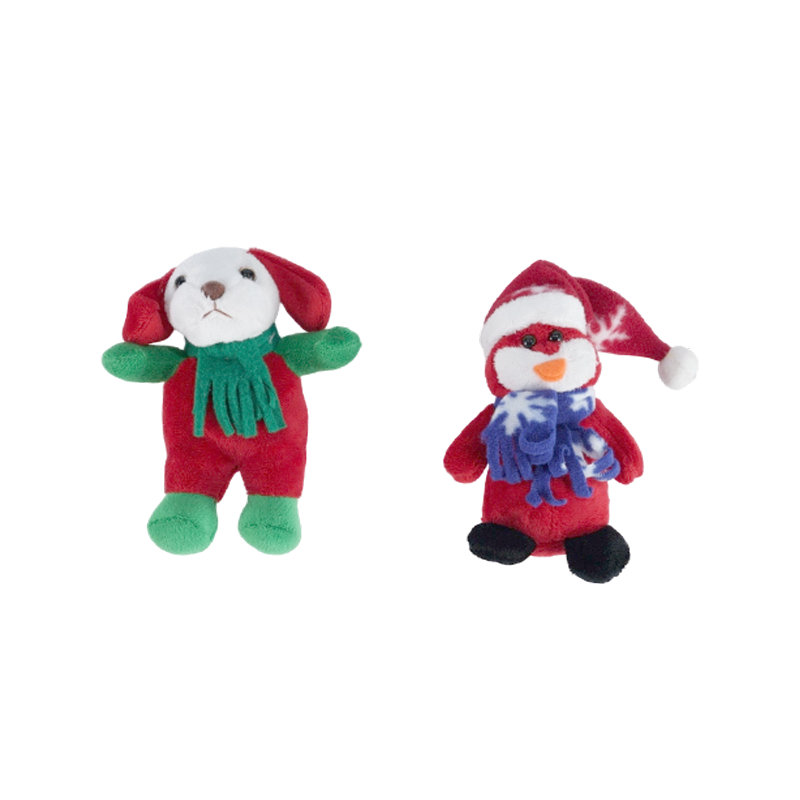 STA0051Christmas Animal Plush Ornament CollectionOrnament formatView product →
 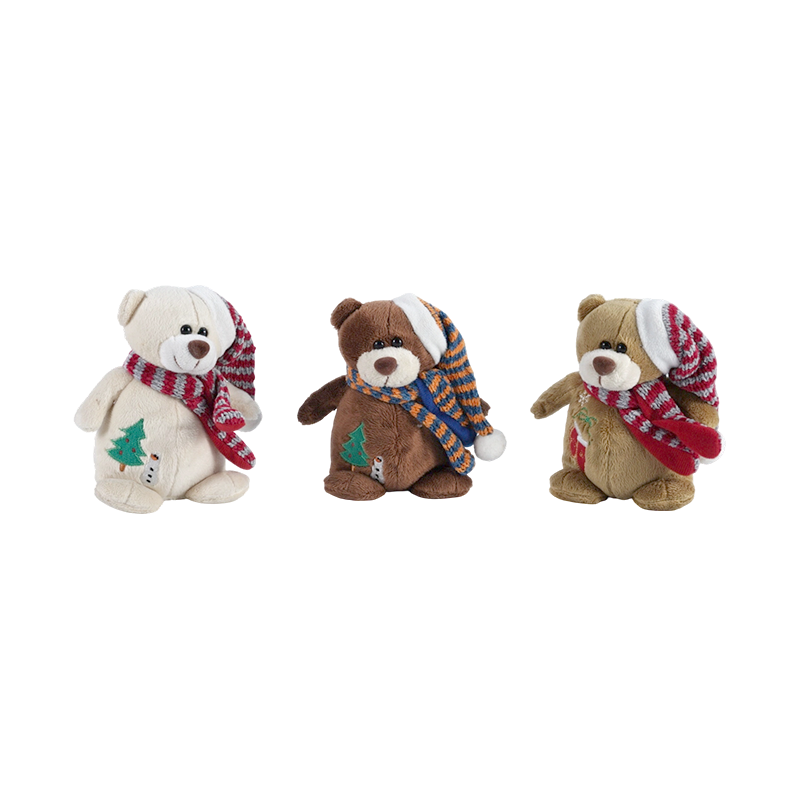 STA01134Christmas Bear Plush Toy Collection5.5 inch, sitting poseView product →
 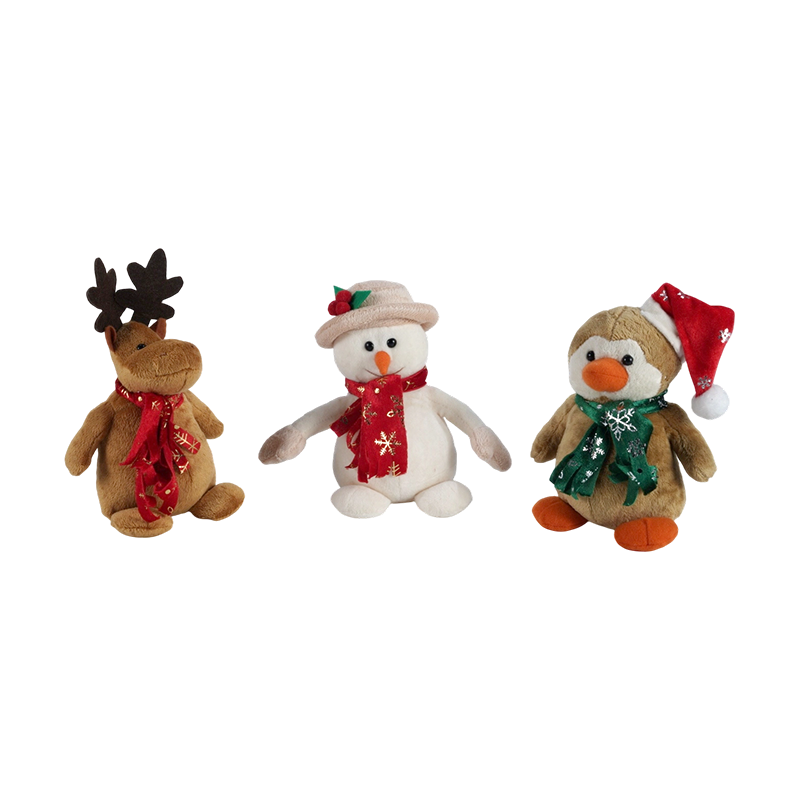 STA0402Sitting Christmas Plush Toy CollectionSitting pose formatView product →
A printed name panel or an embroidered initial turns a generic gift into a keepsake, and it is one of the most requested features in December campaigns. It also adds a per-unit variable cost and a data workflow, because every name has to be proofed, batched and inspected for spelling.
An advent set of 24 small pieces is dominated by packing labour rather than toy cost, and carton weight quickly becomes a logistics issue. A sew-and-stuff kit, with pre-cut felt, a safe needle, thread and filling, positions plush as a screen-free Christmas activity for older children and appeals to buyers who want a gift that occupies the child for an afternoon.
A well-run holiday programme follows the same eight steps every time.
When screening a manufacturing partner, the useful questions are about throughput and process rather than price alone: how many pieces per month, who signs off the golden sample, how many revision rounds are included, and what happens if a test fails. A supplier with roughly 1,800 square metres of floor space and more than 200 staff, such as Tai Zhou Golden Sun Arts & Crafts, can usually absorb a 10,000-piece seasonal order without pushing existing programmes off the line, but that capacity has to be reserved months ahead.
Most holiday programmes that miss their window fail for one of a small number of reasons.
| Risk | What it looks like | Countermeasure |
|---|---|---|
| Late start | Brief sent in July for a November sail date | Work backwards from the shelf date and freeze the design five to six months ahead |
| Testing on a prototype | Report issued against a sample that is not production-intent | Test only the golden sample, made from final fabric and trims |
| Post-test changes | Fabric or trim swapped after certification | Freeze the bill of materials before testing and re-test after any change |
| Age grade mismatch | Removable hat or button on a product sold for under-threes | Set the age grade in the brief, then design accessories around it |
| Unreserved capacity | Factory autumn slots already committed in spring | Confirm the production window in writing when sampling starts |
| Packaging artwork late | Cartons ready but the gift box is not | Approve packaging artwork in parallel with the second prototype |
Six months before the ship date is comfortable, five months is workable, and anything under four months means paying for air freight or accepting a reduced range. The design freeze date matters more than the purchase order date.
For a fully custom item with dyed-to-match fabric, 1,000 to 3,000 pieces per style is common, set mainly by the fabric mill minimum. Designs using stock fabric with a printed or embroidered logo can start lower.
Yes. Embroidery, printed fabric panels and woven labels are all standard. Personalised names need a proofing step and a batching system, so ask how names are checked before packing.
It depends on the market: EN 71 in the EU, ASTM F963 and CPSIA in the United States, and equivalent national standards in Japan and Southeast Asia. Testing is charged per style per standard and takes three to five weeks from the golden sample.
Usually yes, if patterns and artwork are archived. Reorders move faster because sampling and testing can be shortened, but colours should still be checked against a retained sample, since dye lots shift between seasons.
The Christmas window is unforgiving, but it is entirely predictable. Decide the shelf date first, freeze the design five to six months earlier, test the golden sample rather than the prototype, and reserve production capacity while other buyers are still considering it.
If a holiday programme is already on the calendar, the most useful next step is a short technical conversation covering size, quantity, age grade, target price and ship date. From there the sampling schedule and the test plan can be mapped against the retail calendar, and the risk of a container arriving after the promotion is removed from the equation.
Address

Your project will meet a
right solution with Golden Sun



 English
 日本語
日本語 Français
 русский
 Español