Content
An EU importer took delivery of 6,000 plush bears in early March. The hand feel was right, the stitching was clean, and the unit price came in 8% below the previous supplier. Four weeks later the container was still sitting in Rotterdam, because the plastic safety eyes had failed the tension test required under EN 71-1. Rework, retesting and air freight erased the savings on the entire order.
That kind of failure is rarely a manufacturing accident. It is almost always a documentation problem. Stuffed animal factories in China build to the specification the buyer supplies, and where the specification stays silent, the factory picks the cheaper reading of it.
So the practical answer is this: treat a China stuffed animals toys order as a specification and compliance project first, and a price negotiation second. The rest of this page explains what that looks like in practice, from fabric weights to realistic lead times.
Buyers usually open a conversation with unit price. Experienced buyers open with three other questions first, because those three determine whether the unit price survives contact with customs and with the retail calendar.
Price sits underneath all three. When two suppliers quote 20% apart on the same drawing, the gap is normally in fabric weight, filling grade, stitching method or testing scope, not in the factory's margin.
Most initial quotations exclude test fees, artwork film charges, hang tag printing and carton marking. Ask for those as separate line items rather than folded into the unit price, otherwise you cannot compare two suppliers honestly. Minimum order quantity is also conditional: 1,000 to 3,000 pieces per style and colour is common, but a complex shaped backpack or a multi-colour DIY kit can push that higher.
A one-page specification saves weeks. Suppliers can quote from it, sampling can be measured against it, and quality control can reject against it. At minimum, it should carry the following.
In practice, three lines dominate. Fabric weight is the largest single lever, because material is the biggest cost block in a plush toy. Eye and nose construction is second, since a plastic component with a lock washer requires additional torque and tension testing while embroidery does not. Colour count is third: each additional fabric colour adds a dye lot, a cutting step and a quality risk, and buyers who reduce a design from six colours to four often save more than they would by pushing the factory on labour.
Material selection is where a plush range is either differentiated or commoditised. The table below compares the materials most commonly used across stuffed animals, shaped backpacks and craft kits, with cost indexed against standard short-pile plush.
| Material | Hand feel | Typical weight | Best suited to | Cost index |
|---|---|---|---|---|
| Short-pile plush | Dense, low shed, easy to print | 220 to 260 gsm | High-volume retail plush | 100 |
| Super-soft plush | Velvety, longer pile, high loft | 260 to 320 gsm | Premium gift and collectible lines | 115 to 130 |
| Corduroy | Ribbed, structured, holds shape | 240 to 300 gsm | Shaped backpacks with animal silhouettes | 110 to 125 |
| Oxford fabric | Woven, wipeable, high abrasion resistance | 210D to 600D | Kids backpacks, lunch bags, travel bags | 95 to 115 |
| Neoprene | Rubber-like, water resistant, flexible | 3 to 5 mm | Crossbody bags, pencil pouches | 120 to 140 |
Filling matters just as much as the shell. Virgin polyester fibre holds loft through repeated washing and is the standard choice for products sold into Europe and North America. Recycled fibre is increasingly requested by brands with sustainability commitments, but it can behave differently under compression, so always approve a sample filled with the final grade rather than a substitute.
Compliance should be designed into the sample, not tested onto it at the end. Four standards cover the majority of export destinations.
The differences are not cosmetic. A tension test under EN 71-1 applies roughly 90 newtons of force to a component such as an eye or a nose, while ASTM F963 applies about 15 pounds-force. Torque limits also differ. A component engineered only to the lighter requirement may pass one market and fail the other, and discovering that after mass production means either reworking the entire batch or scrapping it.
Most non-conformances come from three places: small components that detach under tension, seams that open when filling is compressed, and labelling that omits required warnings or age grading. All three are visible in a single well-run sample review. Buyers who ask for the test report at sample stage, rather than at shipment stage, catch these before tooling and materials are committed. It is worth tracking how the requirements themselves are tightening, as summarised in this overview of recent changes to EU toy safety rules, and building that margin into your development timeline rather than treating it as a last-minute hurdle.
For a 10,000-piece order in a standard plush construction, the working assumption should be 11 to 12 weeks from approved specification to container loading. The chart below shows where those weeks actually sit.
Two of those stages compress easily and two do not. Concept and specification can be shortened by arriving with a finished drawing. Sample revisions can be cut to one round if the specification sheet is genuinely complete. Material lead time and mass production, however, are driven by mill schedules and line capacity, and neither responds well to pressure. Seasonal ranges need to be placed against this calendar five to seven months before the retail period, which means Christmas development typically starts in the second quarter.
Understanding the cost build helps buyers negotiate the right line. Fabric and filling together account for more than half of a typical unit cost, which is why material substitution is the fastest route to a lower price and also the fastest route to a quality complaint.
Three levers move this structure without damaging the product. Reducing colour count from six to four cuts fabric waste, cutting steps and dye-lot risk. Simplifying the silhouette reduces the number of hand-sewn attachment points, which is where labour cost concentrates. Consolidating packaging, for example using one carton size across a range, reduces both material and handling cost. Cutting filling weight, by contrast, is the one saving that reliably comes back as a customer complaint, because the toy loses shape within weeks of use.
Different retail channels want different product structures, and a supplier's range should map onto those structures rather than sit beside them.
Year-round retail and grocery programmes usually want evergreen animal themes with stable pricing and repeatable quality. Farm and forest animal assortments work well here because they sell in every season and can be extended with new poses without redesigning packaging.
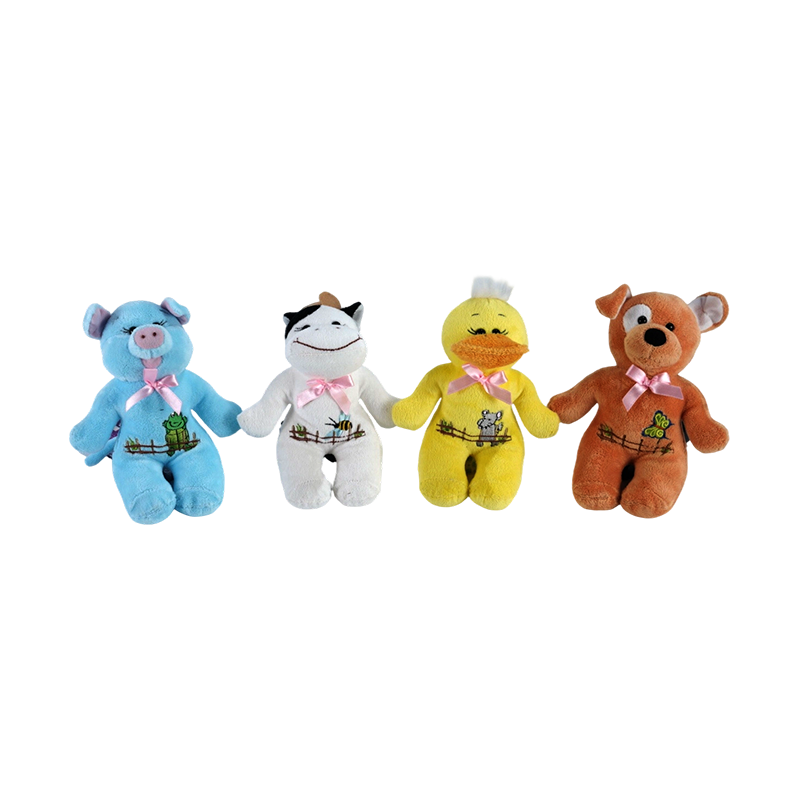
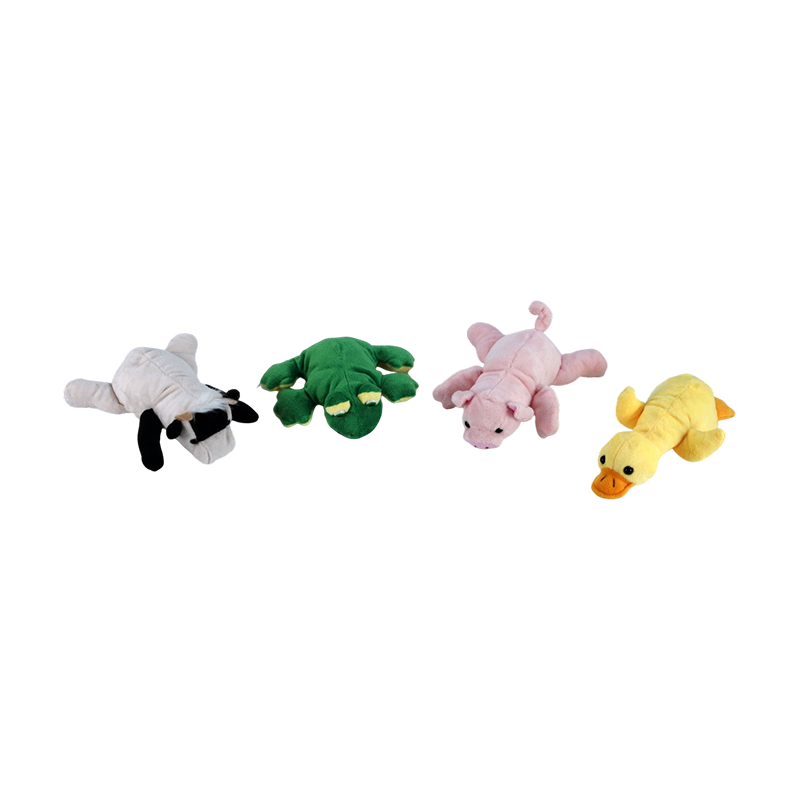
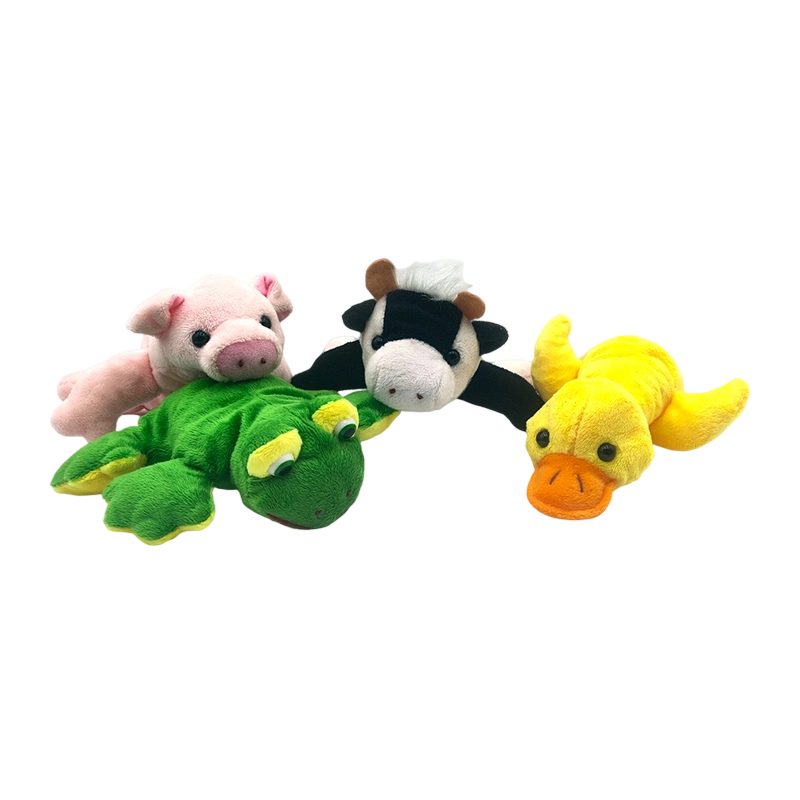 Farm Animal Plush Toys: Pig, Cow, Frog, DuckFour 5-inch farm plush styles support evergreen retail and grocery assortments, with OEM/ODM customization and CE, EN71, ASTM safety compliance.View Product →
Specialty toy shops and gift channels increasingly want participation, not just possession. Plush craft kits that let a child stuff and finish an animal have moved from novelty to a repeatable category in European and US retail, and a kit programme lets a brand offer several price points from a small number of base patterns.
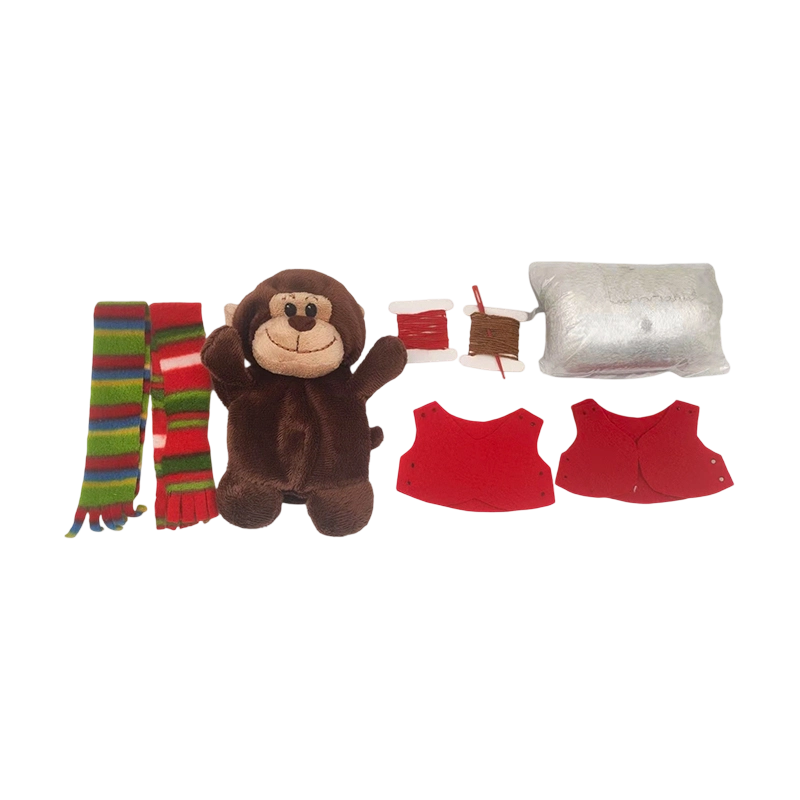 DIY Animal Kits for Boys Plush Craft SetsPre-cut plush kits covering monkey, puppy, cat, panda, and bear suit hands-on toy retail, with OEM development and CE, EN71, ASTM F963, CPSIA references.View Product →
Seasonal programmes carry the highest margin and the tightest calendar. Christmas and Easter ranges need to be confirmed months in advance, with the full size ladder approved at the same time so that production can be scheduled on one material commitment rather than three separate ones.
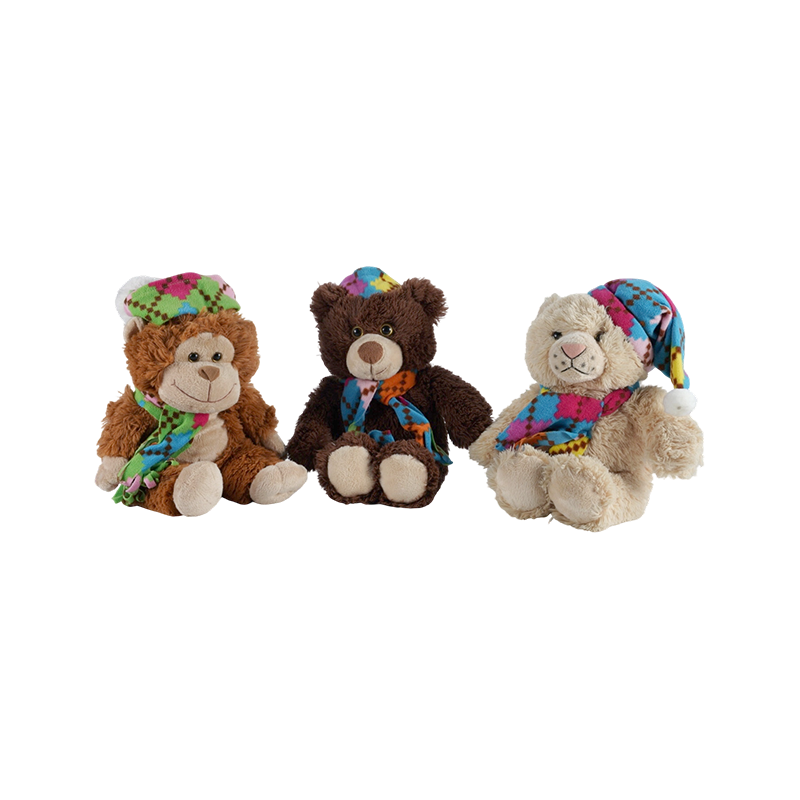
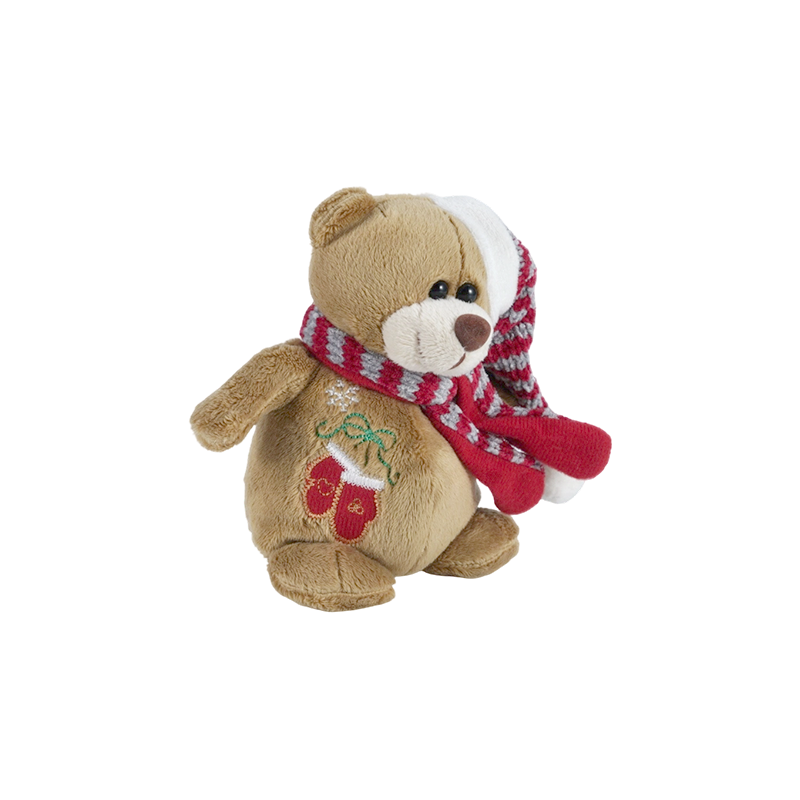 Christmas Bear Plush Toy Collection, 5.5-Inch SittingThree 5.5-inch same-mold sitting bear variants with scarves and holiday embroidery suit Christmas collectible sets, supermarket displays, and gift-bag fillers.View Product →
For standard plush constructions, 1,000 to 3,000 pieces per style and colour is typical. Shaped backpacks, multi-piece kits and designs with several fabric colours usually sit at the higher end, because each colour adds a separate cutting run.
One to two rounds is normal when the specification sheet includes dimensions, fabric weight and component details. Three or more rounds almost always indicates that the brief was incomplete rather than that the factory is slow.
Yes, and it should. Artwork files, print films, embroidery programmes and pattern templates are reusable assets. Confirm in writing that they are stored against your account and not reused on other customers' orders.
Place the order against a development start in the second quarter. Allowing roughly 11 to 12 weeks from approved sample to container loading, development in April or May leaves genuine buffer before a September or October sailing.
Bring a specification sheet, not just a reference photo. The buyers who get consistent stuffed animals from China are the ones who define fabric weight, filling grade, eye construction and test standard before a price is quoted, and who book capacity against the retail calendar rather than against their own approval speed.
If you are working through a first or a fifth programme and want a second opinion on how a design translates into production, send us your specification sheet and we will tell you where the risks sit before sampling begins.
Address

Your project will meet a
right solution with Golden Sun



 English
 日本語
日本語 Français
 русский
 Español